- 1. URI satellite AI ocean currents achieves 10km resolution from altimetry data.
- 2. Nigeria blue economy gains ₦2.5T insights via NITDA ₦500M grants.
- 3. Startups raise $10M from TLcom despite 40% power access gaps.
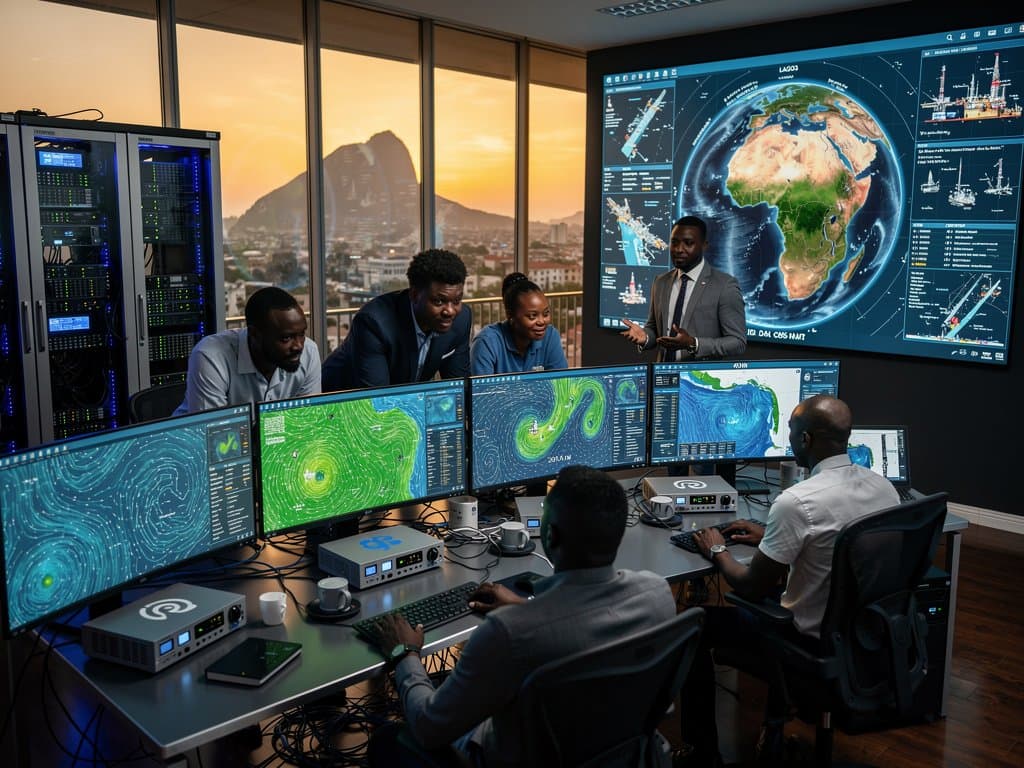
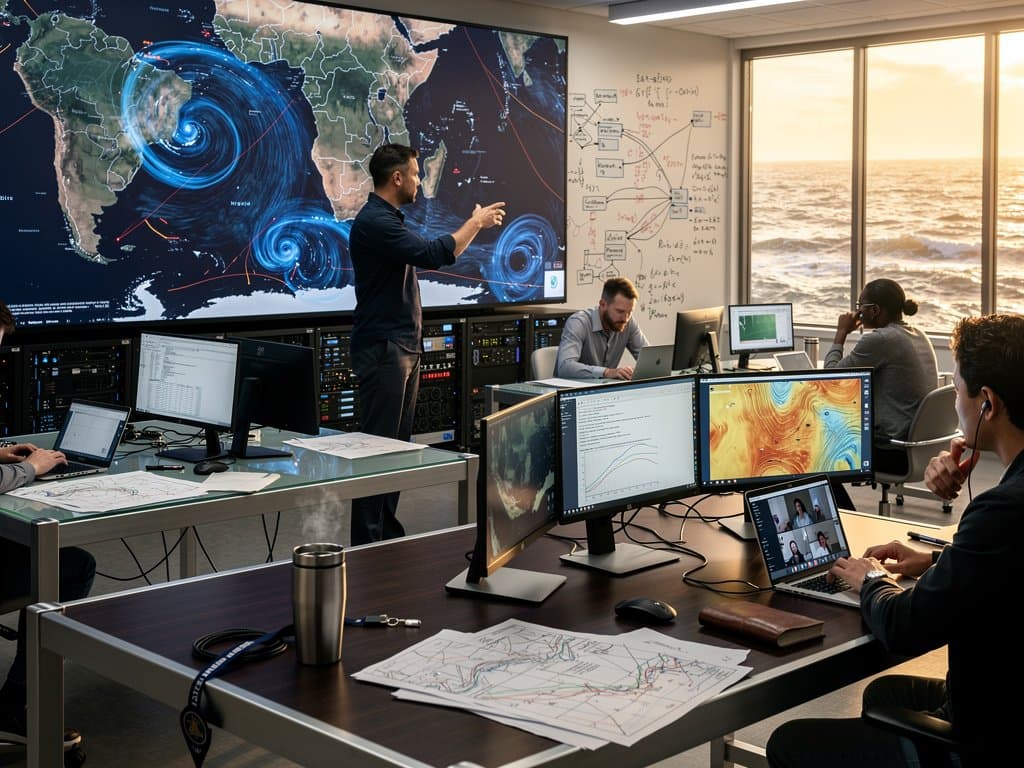
University of Rhode Island (URI) researchers unveiled satellite AI ocean currents mapping technology on April 15, 2024. The tool processes satellite altimetry data to reveal submesoscale eddies under 10km in the Gulf of Guinea, per URI's Rhody Today report. Nigerian developers access precise data via open APIs for climate-resilient apps.
Nigeria's NITDA Director General Kashifu Inuwa Abdullahi praised the tool. It aligns with the National Digital Economy Policy. Coastal startups like CcHUB in Lagos use it despite 40% power access rates, per World Bank 2023 Nigeria Infrastructure Report.
URI AI Method Refines Satellite Altimetry Data
NASA's Jason-3 and ESA's Sentinel-3 satellites capture daily sea surface heights. Traditional models detect mesoscale currents over 50km. URI's deep neural networks denoise data and compute velocities from height gradients to hit 10km resolution.
URI lead oceanographer Dr. Brian Ward trained models on 1 million NOAA buoy measurements. Daily maps update in Copernicus Marine Service repositories. Nigerian engineers integrate data via Python APIs.
Lagos 4G coverage reaches 65%, but costs ₦1,000 per GB, per GSMA 2024 Mobile Economy Sub-Saharan Africa. Satellite data bypasses ground sensors vulnerable to Niger Delta floods.
Gulf of Guinea Data Powers Nigeria Blue Economy
Nigeria's 200-nautical-mile EEZ generates ₦2.5 trillion ($1.5 billion USD) in fisheries and oil annually, per Central Bank of Nigeria (CBN) 2023 data. Ocean currents cause 70% of Apapa port delays, costing $500 million USD yearly.
Satellite AI ocean currents maps enable 15% fuel savings for vessel routing, per Leadway Insurance CEO Mr. Tunde Hassan-Oyekanmi. Climate fintechs forecast Lagos storm surges that damaged ₦150 billion in assets last year.
NITDA's blue economy initiative funds 20 startups with ₦500 million grants. CcHUB's fishery app prototype raised $2 million seed from TLcom Capital in Q1 2024.
Pan-African Reach Beyond Nigeria
Ghana fishermen use URI-enhanced data for 20% catch boosts via SMS alerts, per Ghana Investment Promotion Centre. Senegal's 65% mobile penetration supports aquaculture apps, GSMA 2024 confirms.
Kenya's M-Pesa integrates currents data for weather-linked microloans under Central Bank of Kenya oversight. Egypt tests Red Sea models. Rwanda eyes Lake Kivu applications.
South Africa's SARB licenses similar tools. Andela trains 1,000 developers yearly on AWS. Flutterwave adds ocean data to DeFi oracles after $250 million Series D from Lead Investor B Capital.
Nigeria Oceantech Funding and Infrastructure Boost
TLcom Capital led $10 million rounds for five Nigeria oceantech firms in 2024. URI's open-source code cuts R&D costs by 50%. NITDA subsidies cover AWS credits up to ₦100 million.
Starlink deploys 5,000 Nigeria terminals for 100Mbps rural broadband. Power banks and solar kits address 60% outages in coastal zones, per Rural Electrification Agency.
Local firms outpace rivals like IBM. Series A rounds average $5 million USD at 10x revenue multiples amid naira volatility of ₦1,600/USD.
Satellite AI ocean currents position Nigeria as Africa's oceantech hub. NITDA projects $1 billion GDP addition by 2027.
Frequently Asked Questions
What is satellite AI ocean currents technology?
URI's satellite AI ocean currents uses machine learning on NASA/ESA altimetry data to map submesoscale currents under 10km resolution.
How does satellite AI ocean currents help Nigeria tech?
Delivers Gulf of Guinea data for startups via NITDA. Supports maritime fintech despite power gaps with open Copernicus APIs.
What climate apps benefit from satellite AI ocean currents?
Lagos storm forecasts, Apapa port routing, and Leadway insurer models use 10km maps for coastal risk management.
Can Nigerian startups access satellite AI ocean currents data?
Yes, CcHUB and Andela developers pull from Copernicus APIs, backed by ₦500M NITDA grants.