- 1. BMW Zagreb AI cuts battery waste 20%, per BMW Group tests, aiding Nigeria assembly.
- 2. NITDA and CcHUB enable adaptation amid 65% outages and 55% mobile growth.
- 3. $50M USD VC in 2024, led by TLcom, values Nigeria EVs at 5-10x revenue.
BMW Group and University of Zagreb launched the AI battery breakthrough on October 8, 2024. It optimizes EV cell mixing, coating, and quality control. Sensors feed data to AI models that predict defects in real time. BMW Group tests show 20% waste reduction. BMW Group announcement.
Nigerian EV startups in Lagos target global supply chains. They face 65% power outage rates, according to World Bank 2023 Enterprise Survey. Yet CcHUB hubs adapt the Zagreb AI for local assembly.
NITDA's National Digital Economy Policy and Strategy (2020-2030) drives AI adoption in manufacturing. CcHUB and Andela train developers on machine learning for EV tech.
Lagos Hubs Tweak BMW Zagreb AI for Nigeria's Heat and Power Gaps
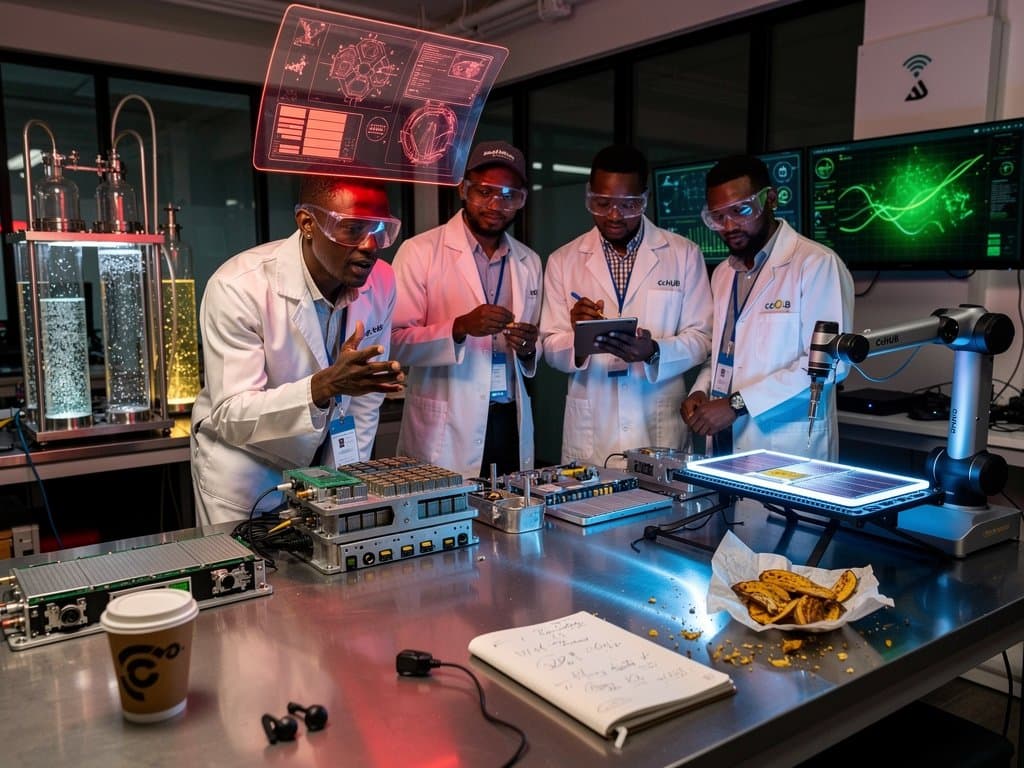
CcHUB engineers modify Zagreb simulations for Nigeria's 35°C tropical averages. Batteries degrade 15% faster here than in Europe, per International Energy Agency (IEA) 2024 data. AltSchool Africa integrates EV battery modules, training 500 developers annually, according to CcHUB's 2024 impact report.
Abuja funds commit $50 million USD to mobility in 2024, per Partech Africa Q3 2024 report. TLcom Capital leads rounds in EV plays. Kenya's BasiGo raised $43 million USD in Series A for electric buses, valuing at 12x revenue.
Blockchain ensures lithium traceability from Zimbabwe mines. NITDA's Nigeria Data Protection Regulation (NDPR) 2023 secures AI datasets. Ethereum trades at $2,315 USD as of October 10, 2024 (CoinGecko).
TechCrunch coverage notes AI addresses Africa's charging gaps.
Pan-African Supply Chains Leverage BMW Zagreb AI Precision
Zimbabwe supplies 10% of global lithium, per USGS 2024 Mineral Commodity Summary. BMW's AI trims costs 15-25%, according to BMW Group data. Nigerian firms build NGN 500 million ($300,000 USD) prototypes, cutting USD imports by 30%.
Lagos tests battery swapping for 10 million commuters. CBN licenses fintechs like OPay for EV payments. Standards Organisation of Nigeria (SON) regulates batteries; NITDA fills AI policy gaps.
South Africa reaches 85% mobile penetration for logistics, per GSMA 2024 Mobile Economy Sub-Saharan Africa. Nigeria hits 55% but grows 12% yearly, per Nigerian Communications Commission (NCC) Q2 2024. Rwanda's Kigali Innovation City pilots AI battery factories.
Egypt's sandbox tests EV imports under FRA regulations. Senegal's DER/FJ invests $10 million USD in green mobility, per 2024 government reports.
Nigeria EV Funding Hits $50M USD Post-BMW Validation
Partech Africa tracks $50 million USD VC into Nigerian mobility in 2024. Ventures Platform's $40 million USD Fund III eyes EV deals. Nigerian startups trade at 5-10x revenue multiples, below Kenya's 12x.
Bitcoin hits $75,272 USD on October 10, 2024 (CoinMarketCap), boosting crypto liquidity for VCs amid Fear & Greed Index at 29 (Alternative.me).
Financial Times analysis shows AI adopters gain 15% cost edges. Use of funds: 60% assembly lines, 30% talent, 10% compliance.
BMW Zagreb AI cements Nigeria's EV role. NITDA scales production. NCC targets 60% broadband by 2025, linking Lagos to global chains.
Frequently Asked Questions
What is the BMW Zagreb AI battery breakthrough?
BMW Group and University of Zagreb apply AI to optimize EV battery mixing, coating, and quality control. It predicts defects in real time, cutting waste 20 percent per BMW tests.
How does the BMW Zagreb AI battery breakthrough impact Nigerian EV startups?
It lowers costs for local assembly despite 65% power outages. CcHUB hubs adapt models; NITDA supports via digital policies for Lagos mobility.
Why are Nigerian tech hubs ready for AI battery production?
Lagos hubs like CcHUB train AI talent for heat-resistant batteries. $50M VC in 2024 funds plays; compares to Kenya's BasiGo.
What regulatory support exists for EV supply chains in Nigeria?
NITDA regulates AI data; CBN handles payments. Policies encourage IP in manufacturing amid 12% mobile growth.