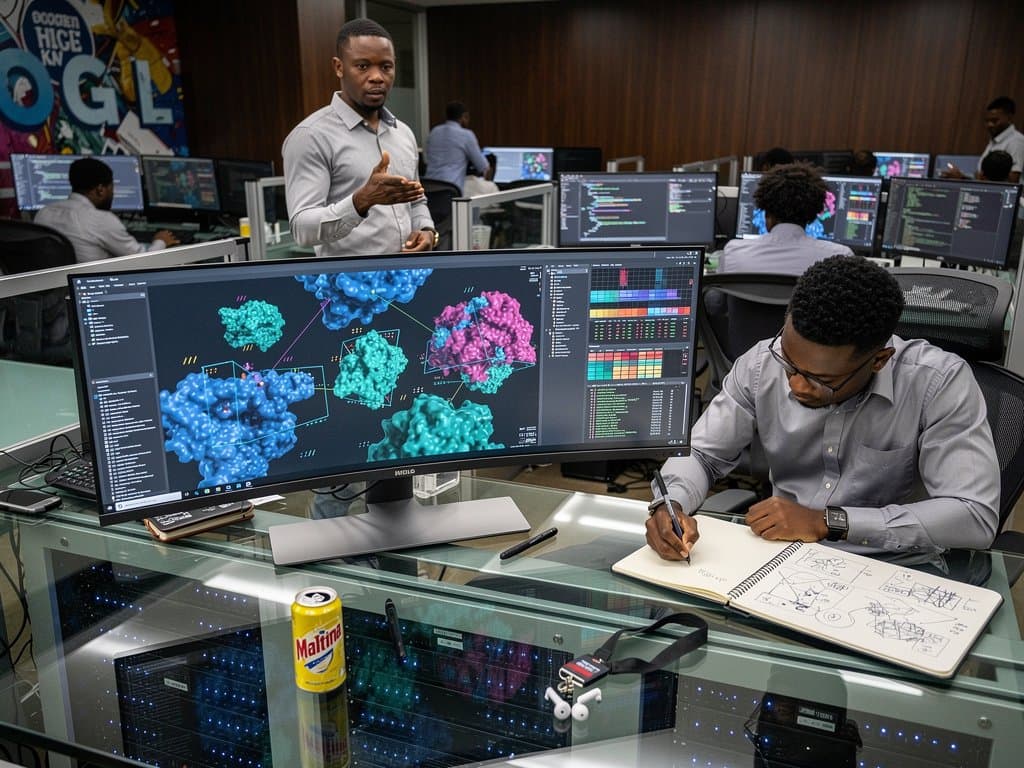
- 1. Nature review: AI target identification reduces timelines from 12 months to weeks.
- 2. WHO: Nigeria bears 30% of global malaria cases, 600,000 African deaths yearly.
- 3. NITDA grants $10M USD compute credits for 50 novel targets annually.
AI target identification slashes early drug discovery timelines from 12 months to weeks, according to a Nature Reviews Drug Discovery 2022 review. Nigerian biotech startups deploy it against malaria. The World Health Organization (WHO) reports 600,000 annual deaths across Africa, with Nigeria claiming 30% of global cases or 100 million infections yearly.
Lagos firms lead this shift. CcHUB incubates AI-driven ventures targeting local Plasmodium strains. NITDA supplies compute credits to bridge power outages.
AI Target Identification Mechanics
Machine learning analyzes genomic data to rank proteins by druggability. Algorithms predict binding sites and prioritize targets.
The Nature review spotlights phenotypic screening. Neural networks process high-throughput assays. DeepMind's AlphaFold delivers 3D structures for 200 million proteins.
Virtual screening evaluates millions of compounds daily. Open-source PyTorch models run on Nigerian servers, slashing validation from months to days.
Nigerian Startups Adopt Nature Framework
Abuja and Lagos biotech firms target artemisinin-resistant kinases. They fuse University of Lagos genomic sequencing with AI models.
WHO data underscores Nigeria's burden: 100 million cases yearly. CcHUB-backed teams develop low-cost therapies for NAFDAC approval.
Pan-African VCs like TLcom Capital lead seed rounds. NITDA grants fund compute despite naira volatility. Nigeria surpasses Kenya's bio-ventures, leveraging Andela-trained talent.
- Aspect: Time to Targets · Traditional: 6-12 months · AI Target ID: 2-4 weeks
- Aspect: Compounds Screened · Traditional: Thousands · AI Target ID: Millions
- Aspect: Structures · Traditional: Experimental · AI Target ID: AlphaFold
TechCrunch notes Africa's biotech surge in 2024, with Nigeria's AI edge.
Nigeria's Malaria Burden Demands Local AI
Malaria erodes Nigeria's GDP by 1.8% annually, per WHO. Neglected tropical diseases (NTDs) like onchocerciasis hit riverine areas hardest.
Startups train models on Nigeria-specific datasets. Nature endorses polypharmacology to combat resistance.
Frequent power cuts drive edge computing adoption. Lagos hubs install solar-powered GPUs. AltSchool Africa equips 5,000 developers yearly for biotech AI.
NAFDAC, NITDA Boost AI Biotech Ecosystem
NAFDAC greenlights AI-generated evidence under FDA-harmonized rules. NITDA mandates data sovereignty via the Nigeria Data Protection Act (NDPA).
Federated learning safeguards patient data. Nigerian firms link into African Union digital health platforms.
NITDA's $10 million USD compute credits (NGN 16 billion at current rates) could unlock 50 novel targets annually. GSK scouts local partnerships. Nigeria challenges South Africa's biotech dominance and Kenya's mRNA efforts.
AI target identification positions Nigeria as Africa's biotech hub. Expect NAFDAC approvals for first AI-discovered antimalarials by 2025.
Frequently Asked Questions
What is AI target identification?
AI target identification uses machine learning to pinpoint disease proteins from omics data. Nature reviews druggability scoring with AlphaFold structures for 200 million proteins.
How does AI target identification help Nigerian startups?
Nigerian startups apply AI target identification to local malaria strains. CcHUB ventures screen millions of compounds rapidly, cutting costs amid funding limits.
Why prioritize malaria in Nigeria with AI?
Nigeria reports 100 million malaria cases yearly per WHO. AI reveals resistant targets in Plasmodium for tailored therapies.
What African challenges does AI target identification face?
Power instability limits GPUs; NITDA offers cloud aid. Andela and AltSchool build talent for local adaptation.