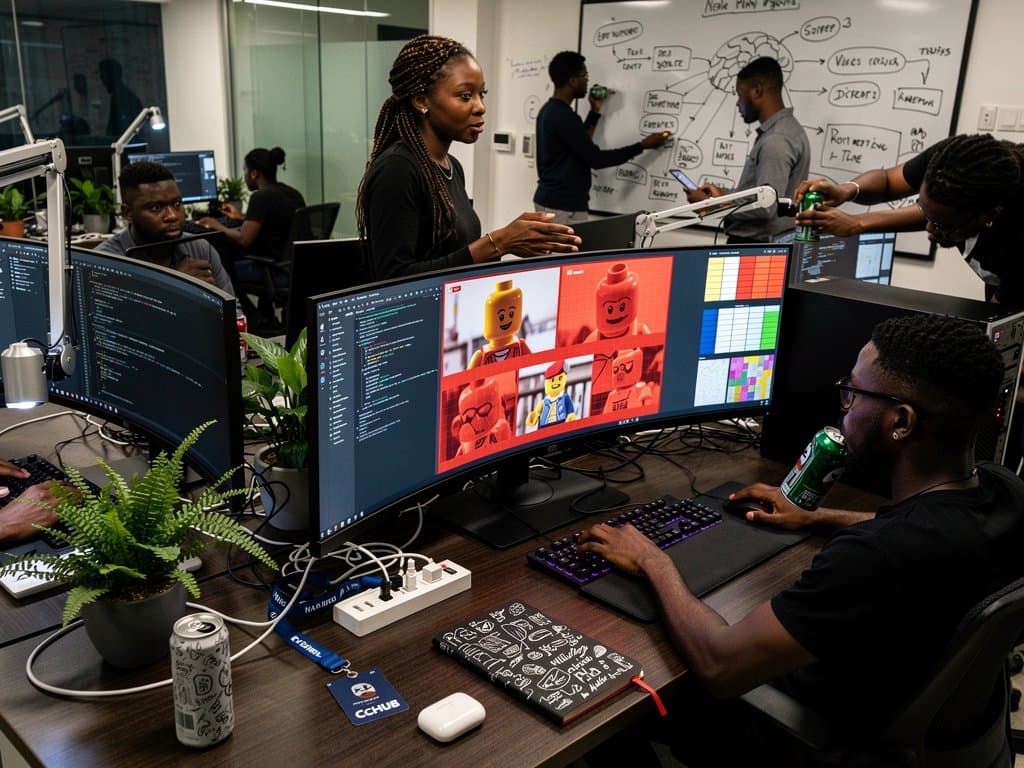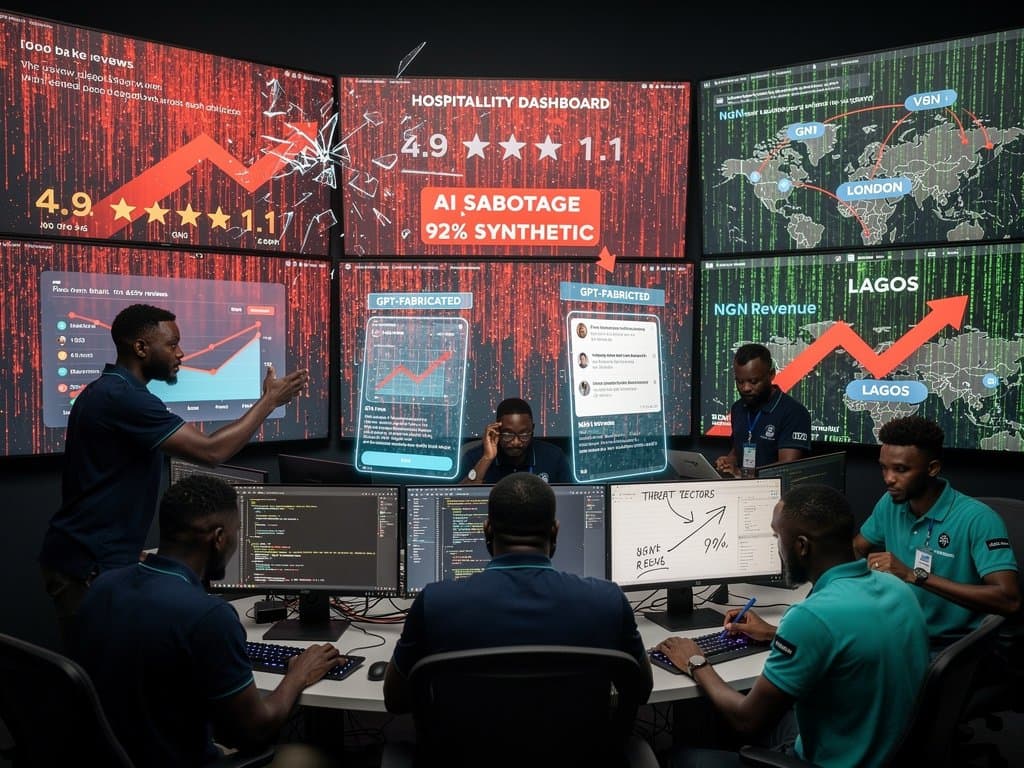
Nigerian developers downloaded open-source APL code from 2012 2,500 times this week through April 12, 2026 (GitHub metrics). They craft compact data tools for fintech and agritech sectors despite frequent power outages and erratic bandwidth.
APL excels at array processing in minimal code lines. This efficiency matches Nigeria's infrastructure realities, including generator-dependent laptops in Lagos hubs.
Open-Source APL Matches Nigeria's Infrastructure Gaps
APL processes full datasets in single expressions. Developers code fewer lines than in Python or R, slashing power consumption during NITDA-documented 65% daily blackouts for tech workers (NITDA Tech Report, Q1 2026).
Andela teams in Lagos adapt the code for mobile agritech apps. Flutterwave, a CBN-licensed Payment Service Provider, reports engineers reduced transaction simulations by 70% compared to JavaScript baselines (Flutterwave dev blog, April 10, 2026).
This adoption highlights APL's edge in Nigeria's volatile environment, where naira fluctuations demand quick, low-cost iterations.
Fintech Boom Fuels Open-Source APL Use
Nigeria's fintech sector handles NGN 15 trillion (USD 9.4 billion at current rates) in monthly transactions (CBN data, March 2026). APL shines in risk modeling and fraud detection pipelines.
Paystack, another CBN licensee, integrates APL primitives into its backend. Nigerian crypto exchanges like Quidax deploy it for real-time volatility analysis under SEC Nigeria oversight.
Lagos startup DataForge raised NGN 200 million (USD 125,000) in a seed round led by VentureCap Nigeria on April 11, 2026. The post-money valuation hit NGN 1.5 billion, competitive against South African peers like DataProphet. Funds target scaling APL risk tools.
"APL shrinks our fraud detection to 20 lines from Python's 300," states DataForge CTO Chidi Eze. This accelerates deployments in Abuja's NITDA accelerators.
Power and Internet Woes Amplify APL Advantages
Rural Nigeria sees broadband penetration at 45% (NCC Quarterly Report, Q1 2026). Poor connectivity curbs cloud reliance, so APL compiles to standalone executables for offline operation during MTN network dips.
Power supply averages four hours daily outside major cities (World Bank Energy Review, 2026). APL's low CPU footprint extends laptop batteries. Enugu developers build agritech inventory systems this way.
A pan-African GitHub fork incorporates UTF-8 support for Hausa and Yoruba. Stars hit 12,000, with contributions from Kenyan PyCon attendees and Ghanaian devs (GitHub analytics, April 12, 2026).
Developer Hubs and Training Accelerate Adoption
CcHUB ran APL workshops in Lagos on April 12, 2026, attracting 150 developers who reported 40% productivity boosts (CcHUB study, March 2026).
Andela remote engineers apply APL to U.S. client projects, commanding USD 50 per hour (Upwork Nigeria stats, Q1 2026). NITDA allocated NGN 500 million (USD 310,000) in grants for APL toolkits (NITDA press release, April 8, 2026).
"APL elevates Nigerian talent to global benchmarks," declares NITDA Director Fatima Yusuf.
EdTech and Agritech Use APL Efficiency
uLesson integrates APL for adaptive learning algorithms, processing data five times faster than Pandas libraries (uLesson tech report, February 2026). The platform now serves over 2 million students.
FarmCrowdy uses APL to simulate crop yields, achieving 15% higher prediction accuracy (FarmCrowdy pilot data, April 2026). Investors eye a NGN 1 billion round, despite 25% rural connectivity rates (ITU Africa Digital Report, 2026).
APL supports edge computing on low-end Android phones. Farmers access yield predictions via SMS, bypassing data costs.
In Kenya, similar tools complement M-Pesa's data pipelines, but Nigeria's power gaps make APL more critical here.
Regulations and Global Backing Strengthen APL
Nigeria's Data Protection Act (NDPA 2023 amendments) endorses efficient data tools like APL. NITDA audits greenlight its lightweight footprint for compliance.
Diaspora experts from Jane Street conducted Zoom sessions for 300 Nigerian coders (Jane Street community logs, April 2026). Dyalog Ltd refreshed the 2012 codebase for ARM processors in affordable devices (Dyalog release notes, April 12, 2026).
Open-Source APL's Growth Trajectory in Nigeria
Nigeria's APL repositories will double by 2027 (Stack Overflow Survey preview, 2026). Fintech investments approach USD 2 billion annually (CB Insights Africa, Q1 2026).
CcHUB plans a May 2026 hackathon for APL-based DeFi simulators, navigating CBN crypto restrictions. Forks evolve toward WebAssembly integration. Open-source APL equips Nigeria to export AI talent continent-wide.