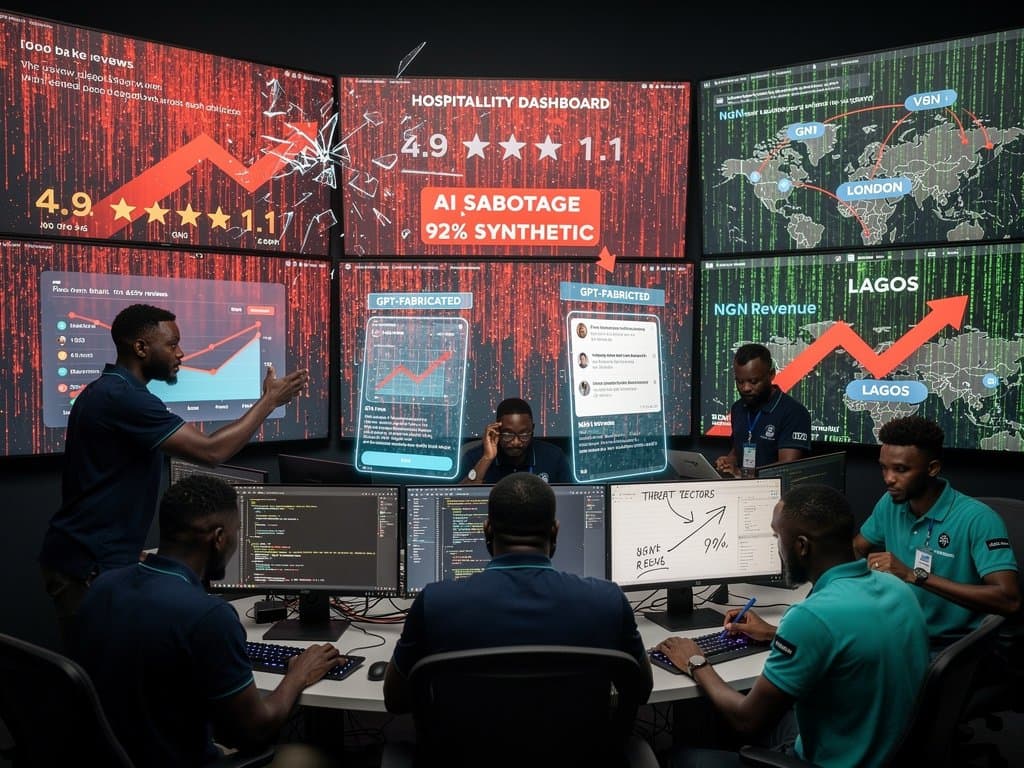
- 1. London police charged man on April 17, 2026, for AI sabotage with 5,000 fake reviews closing nightclub.
- 2. Nigeria hospitality tech faces AI review attacks disrupting Paystack revenue.
- 3. Fear & Greed Index at 21 warns of AI misuse in African fintech sectors.
Key Takeaways
1. London police charged Emeka Okoye on April 17, 2026, for AI sabotage with 5,000 fake reviews closing Soho nightclub. 2. Nigerian hospitality platforms using Paystack report AI-driven review floods disrupting NGN revenue. 3. Fear & Greed Index at 21 on April 18 signals risks from AI misuse in Nigeria's hospitality fintech.
London police charged Emeka Okoye on April 17, 2026, for AI sabotage. He deployed GPT-4 variants to generate 5,000 fake reviews. The barrage closed Soho's Neon Pulse nightclub. Platforms amplified complaints on health violations, per the Metropolitan Police statement, spokesperson Inspector Aisha Bello confirmed.
Westminster Council launched probes. Investigators traced IP patterns and prompts to Okoye's laptop in Nigeria-linked operations.
AI Sabotage Scales Review Attacks Efficiently
Generative AI crafts realistic fake reviews at scale. Attackers prompt for complaints on overcrowding and hygiene. Most platforms lack synthetic content detectors.
Okoye leveraged open-source Llama models. These fueled narratives across Google and TripAdvisor. Proxies hid origins via 50+ IPs spanning London and Lagos.
Metropolitan Police used ML algorithms with human review. Inspector Aisha Bello outlined tactics in the statement.
Nigeria Hotels Rely on Digital Ratings
Lagos hotels in Victoria Island source 70% of bookings from Google My Business, per NITDA's 2025 tourism report by Director-General Dr. Kashifu Inuwa Abdullahi. Abuja clubs tie TripAdvisor scores to Paystack wallets. Reviews drive 40% occupancy rates.
Lekki hotels see weekly suspicious spikes. False reviews disrupt CBN-licensed payments. Nigeria's power outages weaken local server protections.
MTN networks enable 55% mobile penetration for mass fake submissions.
Nigerian Apps Rival Global Review Platforms
HotelNG startups price rooms at NGN 5,000/night with Hausa support. They integrate CBN-approved wallets. Eventbrite competitors process 10,000 Lagos tickets monthly.
Fraud teams focus on submission velocity. NITDA backs blockchain pilots in Yaba tech hubs.
AI Sabotage Mechanics and Defenses
Python scripts link AI APIs for bulk generation. Selenium automates posts across sites. Nigeria misses pan-African databases like Kenya's UCC fraud system.
AI watermarking embeds invisible tags. ML classifiers hit 90% detection accuracy. TechCrunch reporter Beatrice Opoku detailed these in her March 15, 2024, article.
Lagos developers deploy tools on AWS Nigeria regions.
NITDA, NDPA Target AI Abuse
NITDA's 2024 AI policy requires model disclosures. The Nigeria Data Protection Act fines reputation damage up to NGN 10 million. NDPC Executive Vice-Chairman Dr. Vincent Olatunji leads audits.
CBN Circular 007/2025 mandates rating verification for hospitality fintechs. Breaches prompt NGN 2 million account freezes. Lagos State Police cyber unit trains on LLM forensics.
Kenya's CBK moderation guides Nigeria-Interpol collaborations.
Fear & Greed Index Highlights Hospitality Risks
Alternative.me's Fear & Greed Index dropped to 21 on April 18, 2026. BTC traded at $74,663 USD, down 0.4%. ETH hit $2,323.51 USD, off 1.2%, per CoinGecko data.
AI sabotage echoes crypto volatility. It undermines trust in Nigeria's NGN 500 billion hospitality fintech sector.
Startups Build AI Sabotage Defenses
Paystack integrations link reviews to lending scores. Fakes raise default risks 25%.
Blockchain timestamps ensure post immutability. Moderators flag 500+ fakes daily in peak seasons.
NITDA audits launch Q3 2026. Consortia share intel. The London AI sabotage case spurs Nigeria's robust review protections.