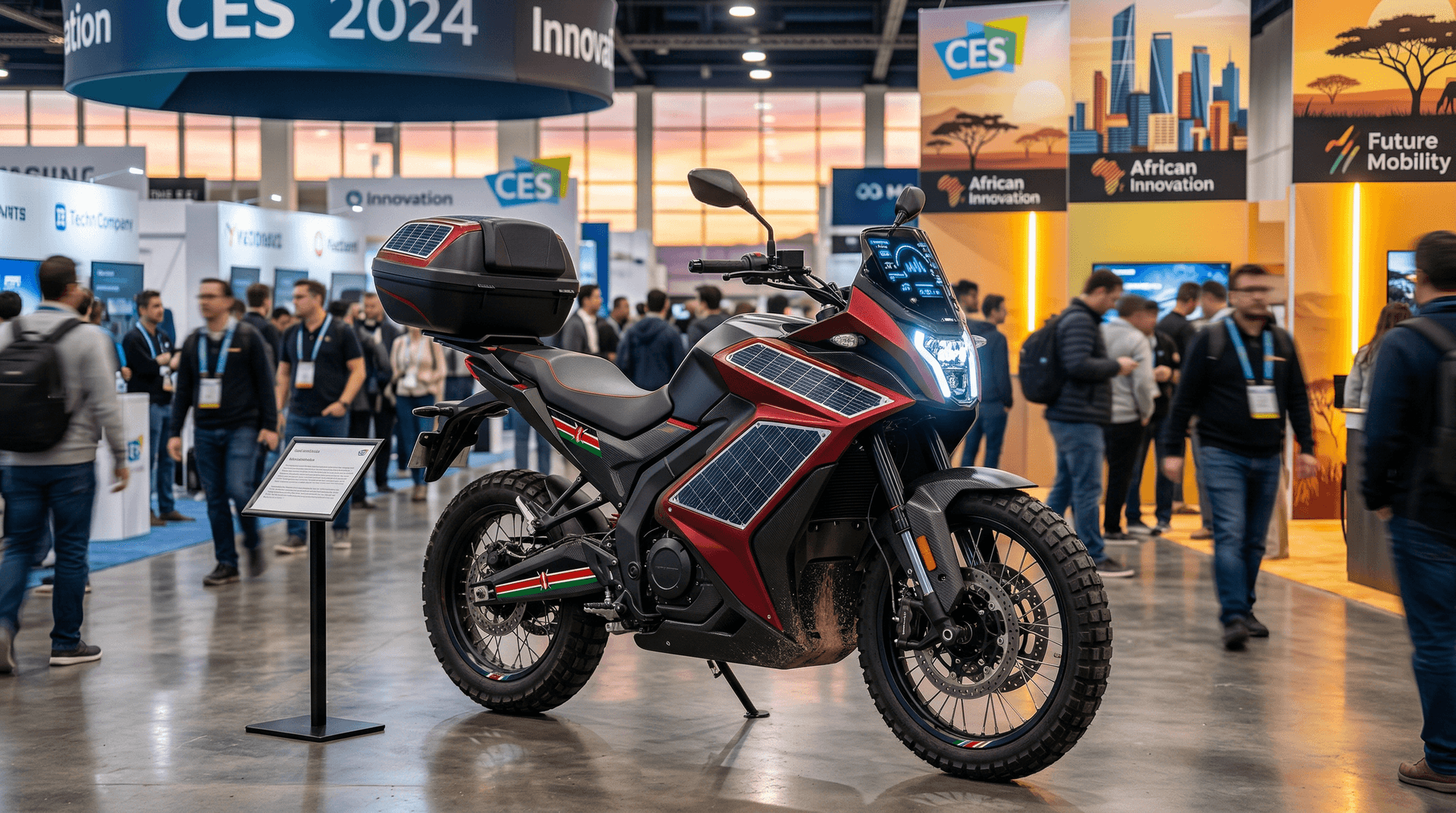
The Consumer Electronics Show (CES) 2024, kicking off on January 9 in Las Vegas, has always been a global stage for cutting-edge technology. This year, African innovation stole the spotlight with Njiri Motors, a Kenyan startup, unveiling its revolutionary solar-powered electric motorbike. Designed specifically for Africa's diverse and challenging road conditions, this gadget represents a significant milestone in the continent's push towards sustainable mobility.
As a senior tech journalist covering the African tech ecosystem, I've seen countless smartphone launches and wearable debuts, but Njiri's e-motorbike stands out. It's not just a gadget; it's a practical solution addressing real-world problems like high fuel costs, pollution, and unreliable public transport in countries like Kenya, Nigeria, and South Africa.
Meet the Njiri Electric Motorbike: Specs and Features
At the heart of Njiri's offering is a rugged electric motorbike equipped with integrated solar panels on the bodywork. The bike boasts a 72V lithium-ion battery pack, delivering a range of up to 120 kilometers on a full charge—ideal for daily commutes in urban and rural settings. Top speed clocks in at 80 km/h, with acceleration optimized for pothole-ridden roads common across Africa.
Key features include:
- Solar Charging: Roof-mounted panels generate up to 200W, extending range by 20-30 km daily under optimal sunlight.
- Rugged Build: IP67 water and dust resistance, reinforced chassis for off-road durability.
- Smart Tech: Bluetooth connectivity via a companion app for GPS tracking, battery monitoring, and over-the-air updates.
- Affordability: Priced at around $1,200 (KSh 195,000), it's competitive with petrol bikes while slashing running costs by 70%.
- Payload Capacity: 150 kg, perfect for boda-boda (motorcycle taxi) operators.
Njiri's founder, Kenyan engineer James Mwangi, emphasized during the CES demo: "We built this for Africa—by Africans. No more imported solutions that fail on our roads." The prototype drew crowds, with potential partnerships hinted from Asian battery suppliers.
Njiri Motors: From Nairobi Garage to Global Stage
Founded in 2022 in Nairobi's tech hub, Njiri Motors emerged from Mwangi's frustration with fossil fuel dependency. Starting in a small workshop, the team prototyped using locally sourced materials where possible, partnering with Kenyan universities for R&D. By mid-2023, they secured seed funding from African VCs like TLcom Capital, fueling the CES push.
This isn't Njiri's first rodeo. Earlier pilots in Kenya's Rift Valley showed 95% uptime versus 70% for ICE bikes, thanks to minimal maintenance—no oil changes or spark plugs. Now, with CES exposure, Njiri eyes manufacturing scale-up, potentially creating 500 jobs in Kenya by 2025.
CES 2024: Africa's Growing Presence in Gadgets
CES 2024 featured over a dozen African exhibitors, signaling the continent's tech maturation. Fellow Kenyans Roam (electric buses) and BasiGo rubbed shoulders with Njiri, while Nigerian firms like Newtopia VR showcased immersive gadgets. South Africa's Aerobotics demoed drone tech for farms.
For gadgets specifically, Njiri's motorbike aligns with the EV trend. Globally, CES highlighted e-bikes from Super73 and Segway, but Njiri's solar twist is uniquely African, leveraging the continent's abundant sunshine. No Claude 3 or futuristic AIs here—just practical hardware.
Transforming the African Tech Ecosystem
Africa's two-wheeler market exceeds 10 million units annually, dominated by petrol bikes from India and China. EVs could disrupt this, cutting import bills (Nigeria alone spends $5B on fuel yearly) and curbing emissions. In Nigeria, where Lagos traffic is notorious, e-motorbikes could ease okada bans while boosting gig economy riders on apps like Max.ng.
Governments are aligning: Kenya's 15% EV import duty waiver, Nigeria's National Automotive Policy, and South Africa's RMI incentives. Yet, Njiri addresses pain points—solar mitigates grid unreliability (Africa's energy access is 50%).
Comparatively, China's Yadea leads globally, but Njiri's local adaptation (e.g., larger tires for dirt tracks) gives it an edge. Pair it with Transsion's Tecno phones (80% African market share), and you have a full mobility-tech stack.
Challenges Ahead for African EV Gadgets
Scaling won't be easy. Battery supply chains are China-dependent, costs hover high despite falling 20% yearly. Infrastructure lags—only 5,000 public chargers continent-wide versus millions needed. Theft and financing (microloans via M-Pesa) are hurdles.
Njiri plans solar stations at markets, pay-per-km models like Ampersand's Rwanda success (10,000 e-motos). Investors at CES showed interest; a Series A could land by Q2 2024.
Why This Matters for Nigeria and Africa
For Technology Times NG readers, Njiri's debut foreshadows Nigerian opportunities. Lagos startups could adapt similar tech for danfo routes. With 60% youth population, gadgets like this fuel entrepreneurship. As Bitcoin ETFs grab headlines elsewhere (approved Jan 10), Africa's real wealth is in homegrown innovation.
Njiri's e-motorbike isn't just a gadget—it's a beacon. Expect copycats, collaborations, and perhaps a Naija version soon. CES 2024 proves: Africa's tech ecosystem is accelerating.
Word count: 912