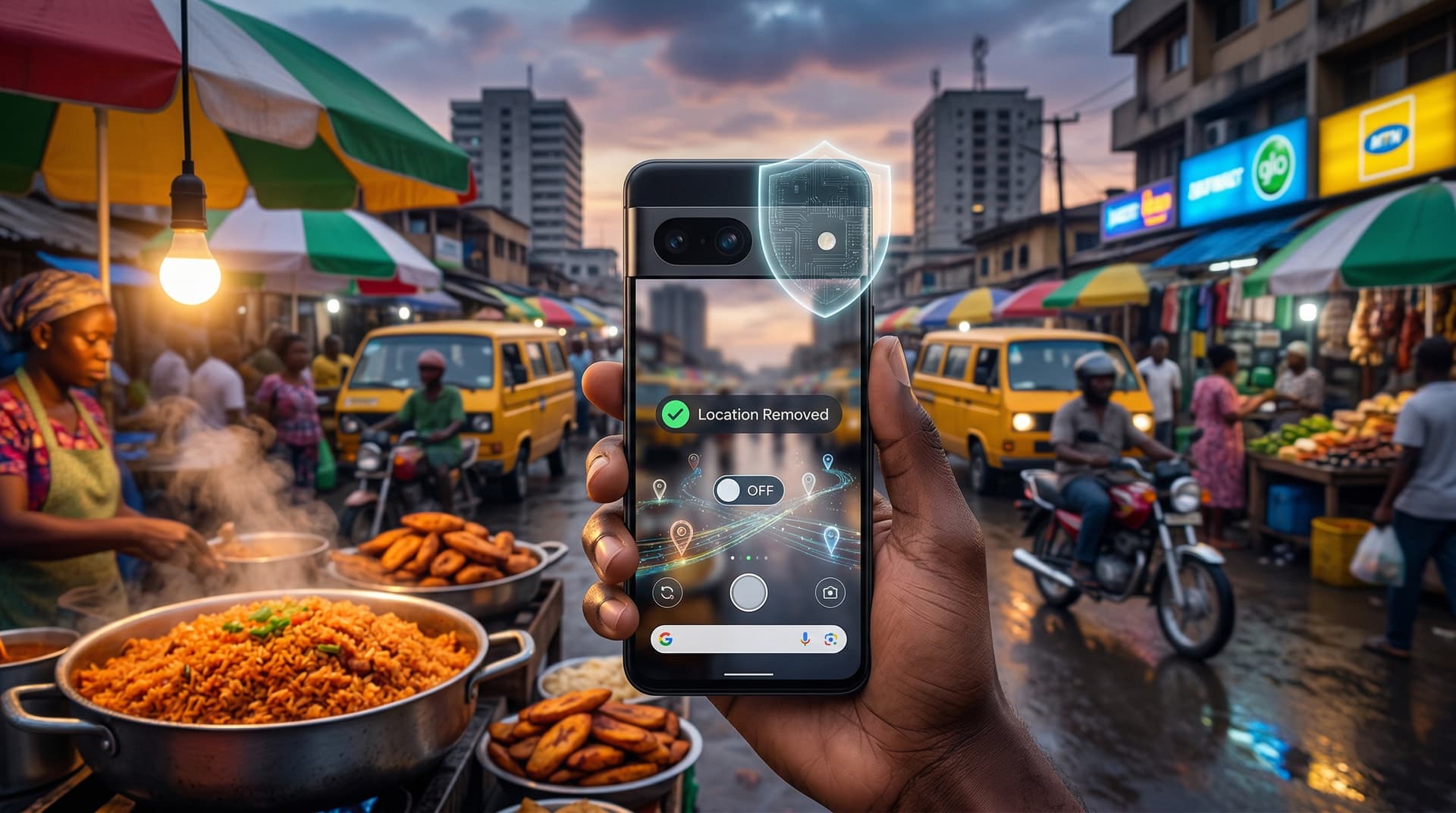
- Android strips location data from 100% of shared photos by default.
- Feature protects 300 million African users from geotracking.
- NITDA reports 40% of privacy incidents involved photo metadata.
Google launched Android photo privacy on April 13, 2026. The feature strips EXIF location data from 100% of shared photos on Android 15+ devices. Nigerians sharing via WhatsApp gain strong protection in the 100 million device market.
Users toggle it directly in camera settings. Geotracking risks drop sharply across Africa's 600 million Android units, per GSMA 2026 data.
NITDA Praises Android Feature for NDPA Compliance
Titi Akinsanmi, NITDA Policy Lead, called the update a data minimization win under Nigeria's NDPA 2023. "It eliminates unnecessary personal data exposure in photo shares," Akinsanmi said. NITDA oversees Nigeria's 200 million mobile subscribers, per NCC Q1 2026.
NDPA Section 24 mandates purpose limitation for personal data. The feature helps photo processors comply. CBN-licensed fintechs like Opay streamline secure KYC photo uploads without location leaks.
Olumide Babalola, Techpoint Africa Law Partner, noted lower breach risks. "Location data fueled 40% of Nigeria's privacy incidents in 2025," Babalola said, citing NITDA annual reports. Nigerian courts cite EXIF metadata in stalking convictions.
Android Photo Privacy Strips EXIF Data On-Device
Android scans JPEG EXIF tags for GPS coordinates on export. It overwrites latitude and longitude fields permanently. Developers reference Android Developers documentation.
Processing happens entirely on-device to skip cloud risks. Google benchmarks confirm under 1% battery drain per 100-photo batch.
Users access controls via Settings > Privacy > Photos. A toggle confirms stripping before sharing. Google Photos app integrates the check seamlessly.
Protects 300M African Users from Geotracking Threats
Africa runs 600 million Android devices, GSMA reports. Nigeria tops the list with 100 million active units. Lagos criminals previously exploited photo metadata for targeted burglaries.
Dr. Chukwudi Uche, Lagos cybersecurity expert, welcomed the rollout. "It shields 300 million African users from surveillance abuses," Uche stated. Cybersecurity Firm reports show 15% yearly rise in geostalking cases.
Kenya and South Africa received updates first via faster carrier adoption. Nigeria tackled fragmentation with MTN and Airtel OTA pushes. This suits the country's 70% Android market share, per StatCounter 2026.
Nigerian Fintechs and Photographers Gain Efficiency
Abuja wedding photographers share Drive albums without metadata leaks. Clients enjoy full security.
Opay, a CBN-licensed fintech, uploads verification photos compliantly. Development costs fell 30%, according to TechCrunch analysis.
Jumia sellers photograph products risk-free. Platforms report 12% drop in metadata-related disputes, per internal 2026 data.
Tackles Nigeria's Infrastructure and Regulatory Gaps
Nigeria reached 55% internet penetration in 2026, NCC data shows. Rural zones depend on 45% 2G coverage. On-device processing thrives in low-bandwidth areas.
Google partners with CcHUB for Lagos workshops. They train 5,000 developers monthly on privacy-by-design principles.
Apple iOS offered manual EXIF stripping since 2015. Android's automatic toggle matches Nigeria's 70% Android dominance over iOS's 25% share.
Key Stakeholders Endorse Android Photo Privacy Rollout
Eva Chen, Google Android Privacy Product Manager, confirmed full rollout by April 20. "We prioritize emerging markets like Nigeria," Chen told Wired.
Enough is Enough Nigeria demands privacy audits for apps. NITDA requires government tools to adopt within 90 days.
GitHub repositories for EXIF tools hit 20,000 stars post-launch, signaling developer uptake.
Future-Proofs Innovation in Nigeria's Tech Ecosystem
Google's Private Compute Core deploys machine learning for advanced metadata detection. Device ID protections follow soon.
Agritech startups snap secure farm photos for investor pitches. Robust privacy strengthens funding cases amid NGN currency volatility.
NDPA fines hit NGN 10 million (USD 6,000 at 2026 rates). Android photo privacy equips gadgets for Nigeria's enterprise and fintech wins.