Dr. Aisha Bello's Cureus scoping review, published April 10, 2026, deploys AI-driven social media analysis on X and Facebook data. It maps vaccine hesitancy patterns across Africa. Nigeria emerges as the leading hotspot.
Nigeria's Vaccine Hesitancy Amid Infrastructure Gaps
Nigeria's vaccine uptake lags global averages by 25 percentage points, per World Health Organization (WHO) 2025 data. Northern states reported 18 polio cases in April 2026 (WHO). Social media spreads misinformation rapidly, fueled by 45% distrust in online health info (Nigerian Institute of Medical Research, 2025).
Dr. Bello, a University of Lagos public health lecturer, observed this during COVID-19 surges. "Fears travel faster online than facts in communities," Bello stated in the review. Lagos health tech startups now craft AI tools to counter this.
LifeBank, a Lagos firm, analyzes supply chain data. Bello's work adds social sentiment layers, targeting northern Nigeria where mobile penetration reaches 85% yet power outages average 18 hours daily (Nigerian Communications Commission, NCC, April 2026).
AI Tools Tackle Multilingual Social Data
Researchers applied natural language processing (NLP), a machine learning technique, to parse chaotic feeds. Models handled Nigerian Pidgin English and Hausa dialects. Sentiment scores ranged from -1 (highly negative) to +1 (positive).
The dataset included 520,000 X posts and 300,000 Facebook comments from 2023-2026 (Cureus). Algorithms identified themes: side effects (32%), government distrust (28%), and religious concerns (15%). Python's NLTK library and Hugging Face transformers drove the analysis.
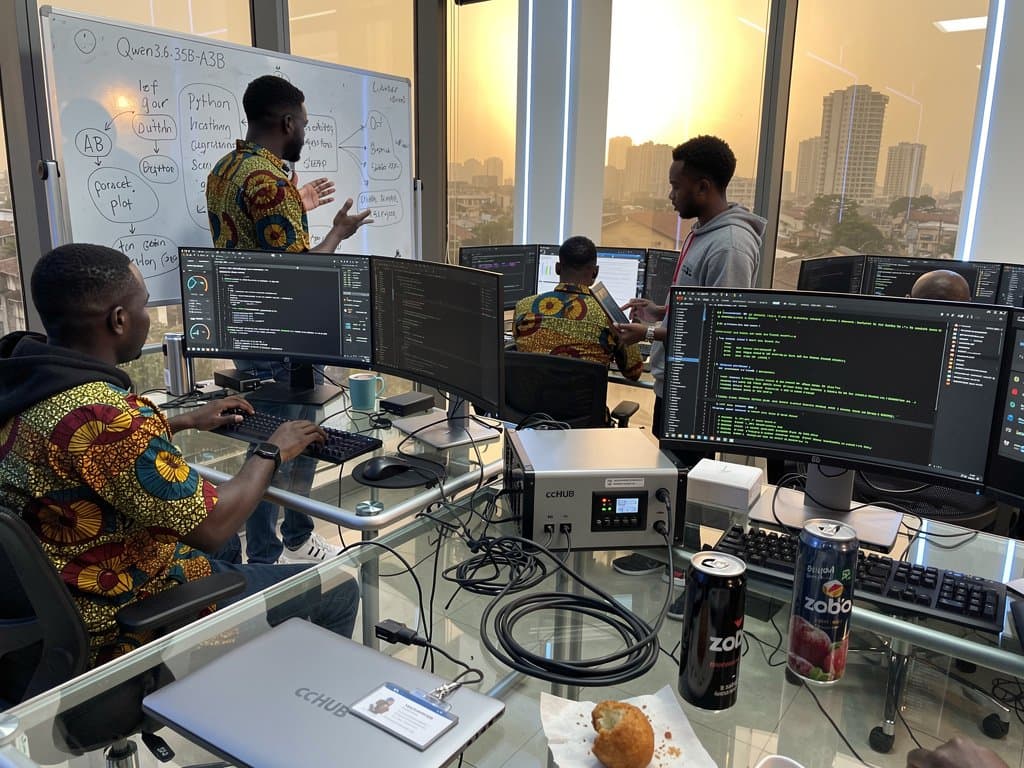
Lagos developers customize these via CcHUB hackathons. Yet, average internet speeds of 14.5 Mbps limit real-time processing (NCC, April 2026). Startups deploy edge computing on solar-powered devices to bypass grid failures.
Regional Data Highlights Pan-African Divides
Northern Nigeria shows 68% hesitancy, with rural confidence below 38% (Bello review). Trust in local health workers hits 74%. Pidgin phrases like "vaccine na poison" dominated feeds.
Kenya logs 52% hesitancy, per similar AI scans by iHub Nairobi. South Africa's urban areas report 68% trust (Council for Scientific and Industrial Research, 2026). Egypt's Cairo hubs show 45% uptake gaps tied to subsidy fears.
These insights shape interventions. NITDA's March 2026 digital health guidelines endorse AI chatbots. Firms integrate them with USSD for low-data users.
Health Tech Startups Secure Funding, Eye Scale
Lagos startup VaccifyAI raised NGN 150 million ($93,750 USD at 1,600 NGN/USD) in a seed round. Ventures Platform led the April 2026 investment. Funds support hesitancy prediction apps and team expansion to 25 engineers.
Founder Tunde Adebayo targets the $2.5 billion African health tech market by 2030 (McKinsey Africa, April 2026). "Bello's review validates our sentiment models, cutting campaign costs 35%," Adebayo told Technology Times NG.
Abuja competitor HealthTrust secured NGN 200 million ($125,000 USD) from Ingressive Capital. It deploys sentiment tools for malaria campaigns. MTN Nigeria partnerships enable SMS alerts, reaching 40 million subscribers beyond internet barriers.
Rwanda's mHealth firm Zipline adapts similar AI for drone-delivered vaccines, raising $35 million USD Series D in 2025.
Navigating Regulation and Infrastructure
Africa produces 1.2 billion social media interactions daily; 62% stay unstructured (GSMA, 2026). Nigeria's grid delivers 4.2 hours daily (Reuters, April 2026). Firms use Starlink for 150 Mbps backups, costing $99 USD monthly.
Nigeria's Data Protection Act 2023 mandates user consent. AI providers anonymize via differential privacy. Rural 3G coverage skips 30% of users (NCC).
Bello released open-source models on GitHub. Andela's 500 Nigerian developers forked them 1,200 times in Q1 2026.
Regulatory Support Boosts Ecosystem
NITDA approved AI health pilots under its 2026 sandbox. CBN fintech licenses enable payment-integrated apps. Senegal's Sonatel mirrors this with $10 million USD health AI fund.
VaccifyAI eyes Ethiopia expansion, seeking $5 million USD Series A by Q3 2026 for Amharic NLP.
Momentum in Talent and Exports
AI pivots health tech to predictive models. Nigerian firms export to Ghana (55% hesitancy) and Senegal. Sector revenue could hit NGN 500 billion ($312 million USD) annually by 2028 (PwC Nigeria, 2026).
AltSchool Africa trains 2,500 machine learning developers yearly, many joining Intron Health's transcription tools. CcHUB's $1.2 million USD AI accelerator funds 20 health startups.
Bello emphasizes localization: "AI delivers when Nigerians build and own it."
AI-driven social media analysis strengthens Nigeria's public health. The ecosystem blends global tech with local realities like power volatility and regulatory nuance.