- Helium Health serves 1,000+ facilities with AI claims processing.
- NITDA trains 10,000 professionals yearly via Microsoft partnership.
- AI pilots deliver 30% faster diagnoses in Nigerian hospitals.
By Adaeze Nwosu
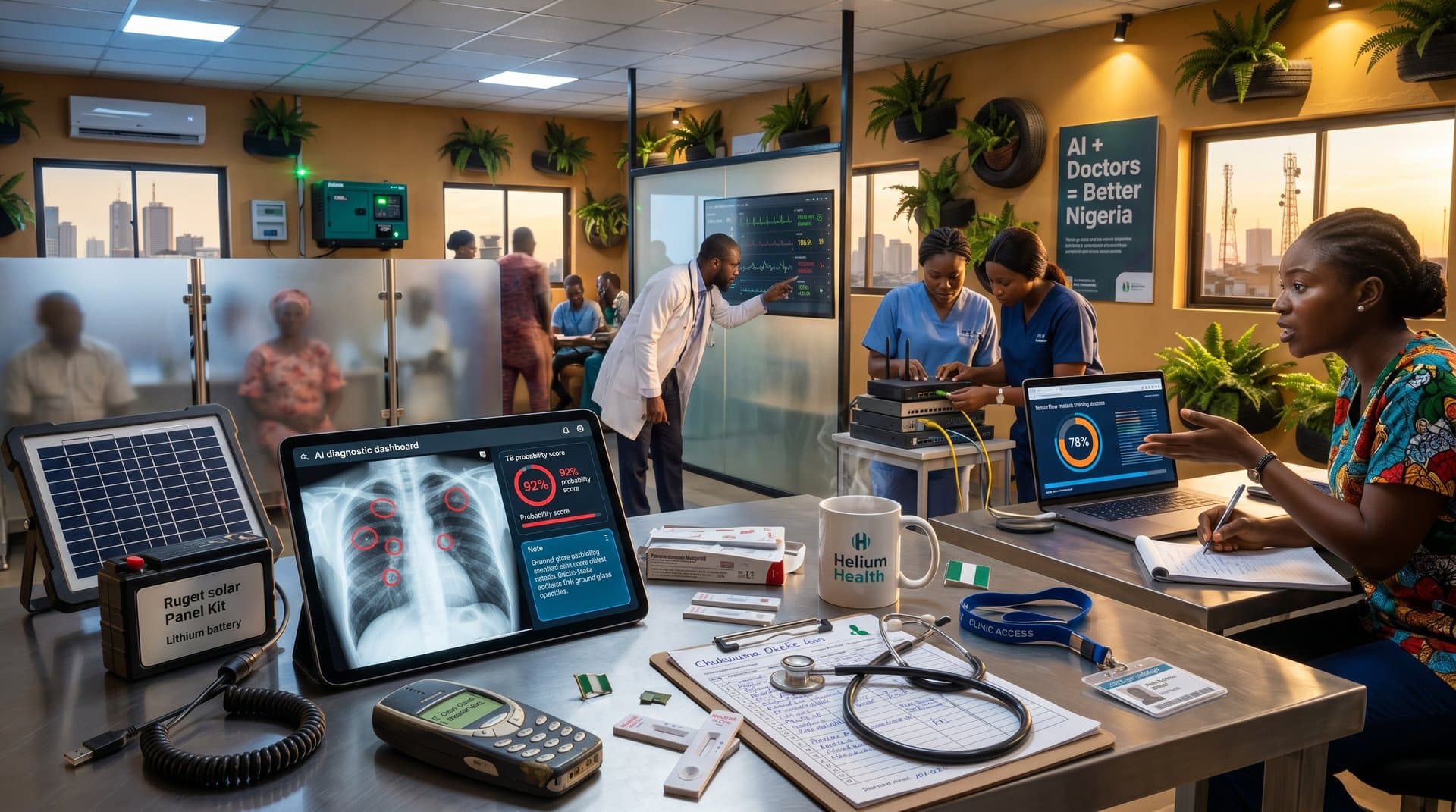
AI displacement in medical specialties accelerates in Nigeria's healthcare sector. Healthtech leader Helium Health deploys AI tools across 1,000+ facilities, per company reports. NITDA Director-General Kashifu Inuwa Abdullahi drives reskilling for 10,000 professionals yearly via the National AI Strategy.
Doctors confront automation in radiology and pathology first. Google DeepMind's AlphaFold analyzes proteins 100x faster than humans, according to Dr. Wes Ely's KevinMD analysis. Nigerian physicians adapt despite 18-hour daily power outages and NGN 50,000 monthly broadband costs, per World Bank data on Nigeria's infrastructure.
Helium Health Leads AI Integration in Nigeria Clinics
Helium Health processes 1 million insurance claims annually with AI anomaly detection. Abuja clinic doctors oversee AI outputs, achieving 30% efficiency gains, firm metrics confirm. The Lagos-based startup raised $30 million USD in Series B funding led by TLcom Capital, earmarked for AI expansion and regulatory compliance with NDPC data rules.
Nigeria's 45% mobile penetration rate, per NCC stats, powers telehealth apps. Reliance Health deploys local AI algorithms to predict outbreaks in rural areas, trained on Nigerian patient data from 500,000 records.
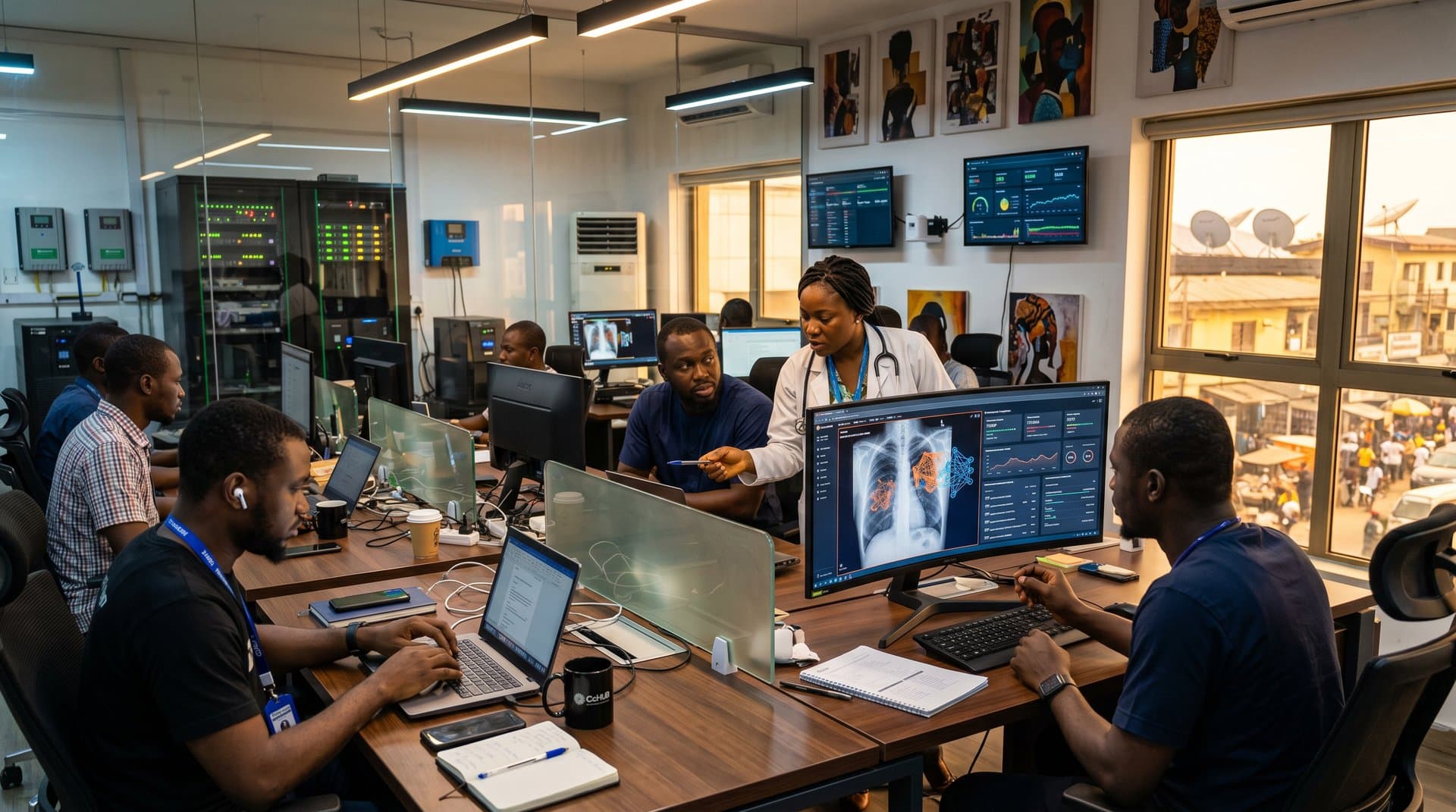
Healthtracka provides instant AI-powered lab results to 500 physicians nationwide. CcHUB in Yaba incubates these models, outperforming IBM Watson on African datasets by 25% accuracy, internal benchmarks show.
NITDA Policies Foster AI-Resilient Careers for Doctors
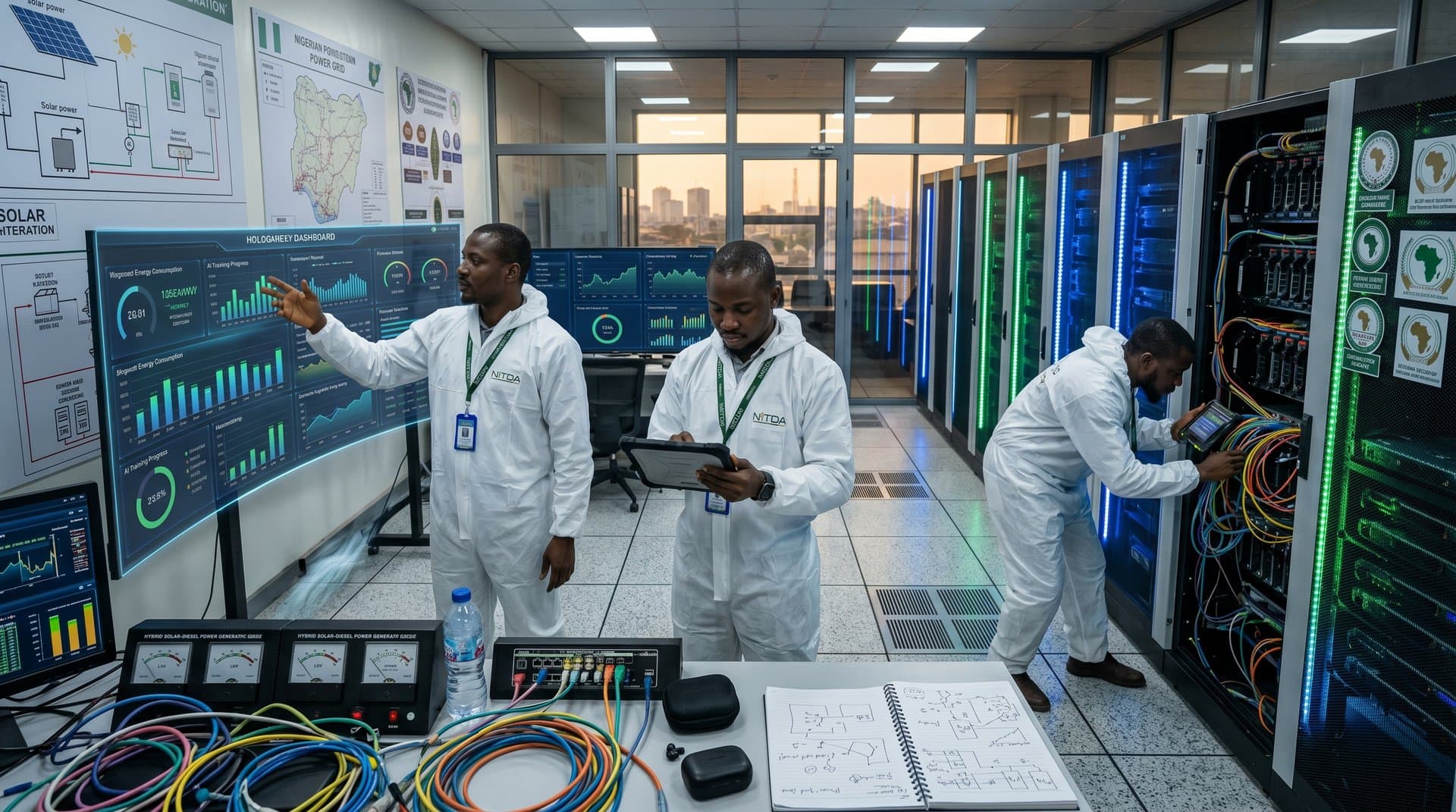
NITDA's National AI Strategy mandates ethical AI use in healthtech, announced by Director-General Abdullahi in 2024. Partnerships with Microsoft train 5,000 developer-doctors at University of Lagos, focusing on CBN-licensed fintech integrations.
The Nigeria Data Protection Commission (NDPC) enforces data sovereignty, building trust in AI diagnostics tailored to Nigerian genetics and diseases like malaria.
Lagos hospital pilots deliver 30% faster diagnoses using NITDA-funded tools, confirmed in agency reports. Government allocates NGN 500 million (~$300,000 USD at current rates) for healthtech grants targeting infrastructure gaps.
Infrastructure Hurdles Drive Nigeria-Specific Healthtech Innovation
Frequent power failures demand solar backups in 70% of urban clinics, per Nigerian Electricity Regulatory Commission data. Starlink cuts latency by 80% for real-time AI consultations in remote Enugu facilities.
High broadband costs—NGN 50,000 monthly—limit on-site model training, forcing reliance on imported OpenAI APIs. Kenyan peer mPharma faces similar issues but exports solutions to Ghana, highlighting Nigeria's regulatory edge via NITDA.
South African firms like Discovery Health integrate AI under stricter POPIA rules, but Nigeria's talent pool grows faster with 2 million annual STEM graduates, UNESCO reports.
CcHUB and VCs Accelerate Doctor Upskilling in Yaba
CcHUB bootcamps train 500 Lagos doctors yearly in prompt engineering and AI oversight. AltSchool Africa certifies 1,000 hybrid AI-medical professionals since 2023.
VCs pour funds into reskilling. TLcom's $30 million USD Helium round specifies 40% for AI tools compliant with NDPC. Partech Africa invests $15 million USD in Reliance Health for predictive analytics.
Diaspora-led mDoc launches wearables with AI analytics, serving 200 rural clinics. Yaba hubs host DeepMind workshops, drawing 300 attendees monthly.
Pan-African AI Healthtech Exports from Nigeria Hubs
Nigerian AI models align with WHO ethical guidelines, per Dr. Jeremy Farrar's July 2024 report. Exports reach Kenya's 4,000 facilities and Ghana's 1,500 via CcHUB partnerships.
Surgeons resist full AI takeover due to empathy demands in patient care. VCs project 20% CAGR for Nigeria healthtech through 2028, driven by $1.2 billion USD sector investments since 2020, per Briter Bridges data.
NDPC privacy rules mitigate data risks. New Abuja incubators train 1,000 medicine-code hybrids annually.
AI displacement in medical specialties transforms Nigeria's threats into advantages. With NITDA funding and VC backing, resilient hybrid careers will dominate African healthtech for the next decade.
Frequently Asked Questions
How does AI displacement threaten medical specialties?
AI automates diagnostics in radiology and pathology. Tools outperform humans in image analysis speed. Doctors shift to supervisory roles per KevinMD insights.
What is Nigeria healthtech doing about AI displacement medical specialties?
Startups like Helium Health integrate AI for claims and triage. NITDA funds reskilling programs. This creates hybrid doctor-AI careers.
How can Nigerian doctors build AI-resilient careers?
Enroll in CcHUB bootcamps for AI skills. Partner with healthtech for tool access. Focus on empathy-driven specialties resistant to full automation.
Which Nigerian healthtech firms counter AI threats to doctors?
Helium Health uses AI for efficient processing. Reliance Health predicts health trends. These augment physicians, reducing displacement risks.