- 1. Statecharts handle BTC at $77,989 USD (CoinMarketCap) resiliently in Nigerian fintech.
- 2. NITDA and CBN compliance via hierarchical guards amid outages.
- 3. XState cuts bugs 40% per CcHUB developers.
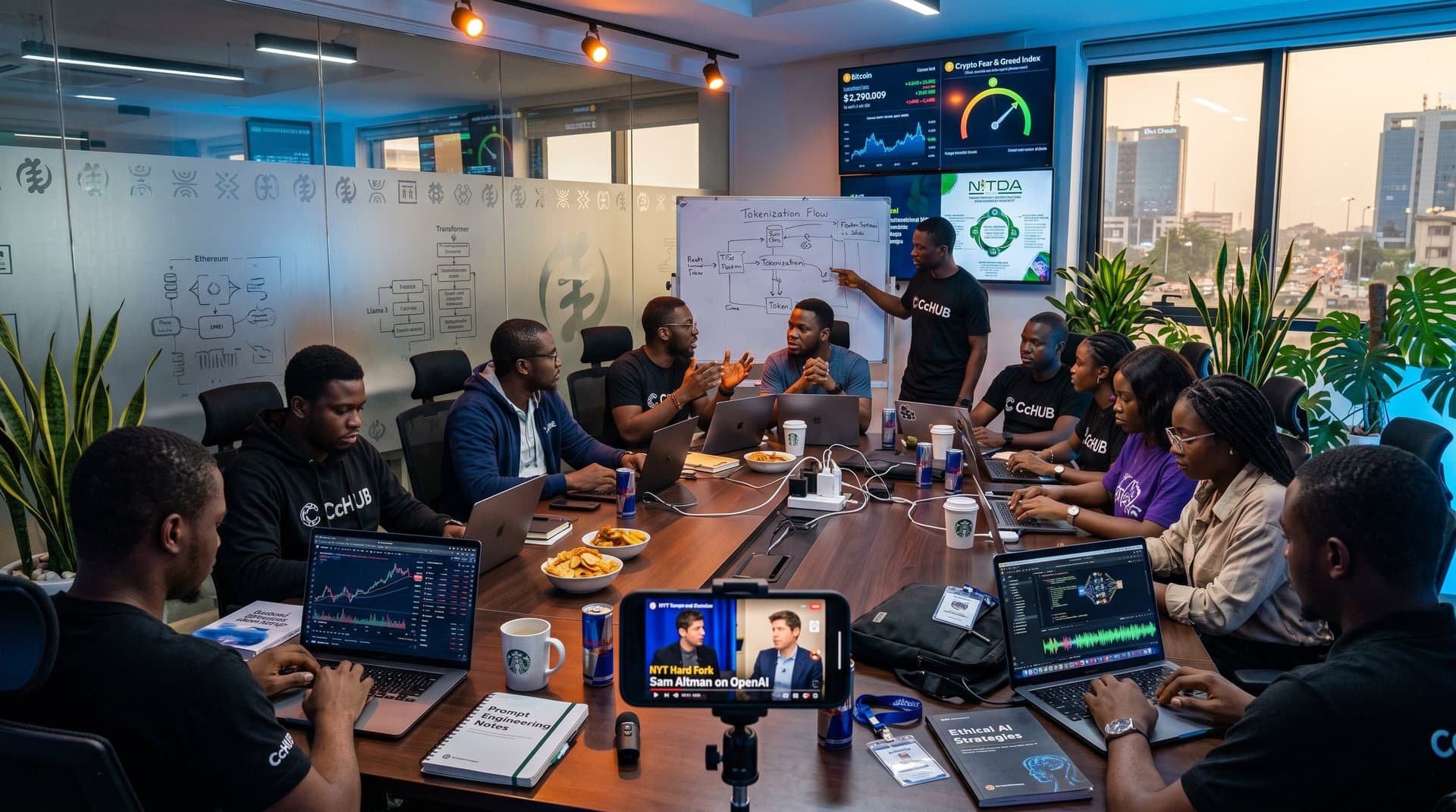
Nigerian developers use statecharts to manage complex states in fintech apps tracking Bitcoin (BTC) at $77,989 USD (CoinMarketCap, Oct 15, 2024). Tools like XState from Stately.ai excel in Lagos hubs such as CcHUB despite daily power outages. NITDA promotes them via digital skills programs. (32 words)
These apps track Ethereum (ETH) at $2,345 USD (CoinMarketCap, Oct 2024). Statecharts prevent UI glitches on Nigeria's 4G networks averaging 15 Mbps (NCC, Q3 2024).
The Crypto Fear & Greed Index hits 33 (Alternative.me, Oct 2024), demanding resilient trading dashboards.
Hierarchical State Machines Boost African Fintech Resilience
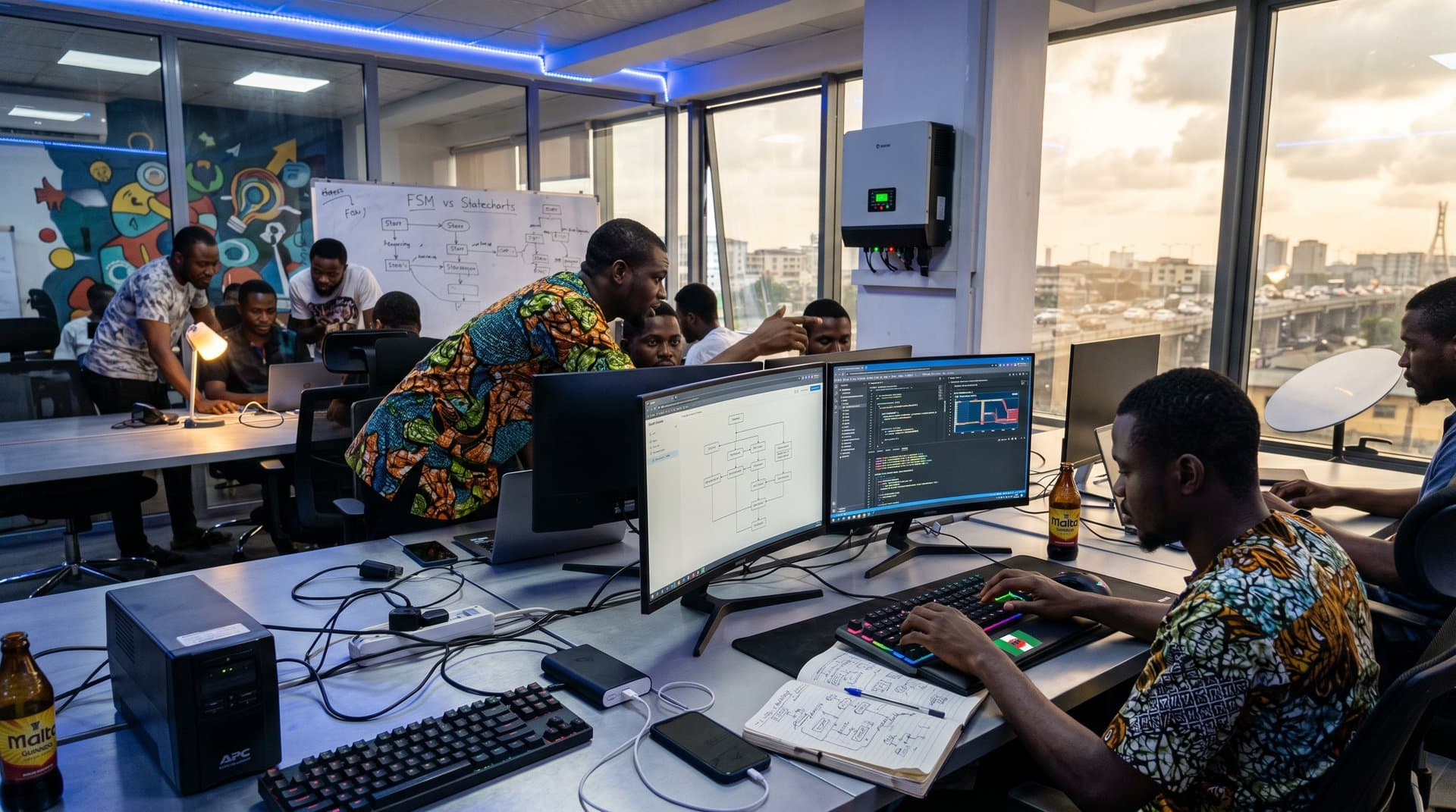
Statecharts extend finite state machines (FSMs) with hierarchy, concurrency, and history. David Harel introduced them in his 1987 ACM paper "Statecharts: A Visual Formalism for Complex Systems." They avoid combinatorial explosions in apps with 20+ states.
Orthogonal regions handle parallel execution, such as KYC verification alongside payment processing. XState implements W3C SCXML standards (W3C, 2023). Stately.ai's visual editor speeds prototyping for Nigerian teams.
Dr. Kashifu Inuwa Abdullahi, NITDA Director General, praised these tools in NITDA's 2024 Digital Economy Diagnostic Report, urging adoption for resilient software.
Statecharts Tackle Nigeria's Power and Network Gaps
Lagos faces 200+ hours of blackouts yearly (NERC, 2024). Statecharts persist UI states in local storage, resuming seamlessly after power returns. FSMs force full reloads, risking data loss.
Abuja developers pair statecharts with React for fintech UIs. Guards validate transitions during network drops, safeguarding user funds under CBN guidelines.
CBN's 2024 Open Banking Circular mandates secure state flows. Statecharts enforce invariants like "no double-spend."
- Feature: State Organization · Finite State Machines (FSMs): Flat structure · Statecharts: Hierarchical nesting
- Feature: Concurrency Support · Finite State Machines (FSMs): None · Statecharts: Orthogonal regions
- Feature: Transition Complexity · Finite State Machines (FSMs): Exponential growth · Statecharts: Inherited actions
- Feature: Visualization Tools · Finite State Machines (FSMs): Limited · Statecharts: Stately.ai editor
- Feature: Offline Resilience · Finite State Machines (FSMs): Poor · Statecharts: Built-in history
Statecharts fit Nigeria's 45% internet penetration (NCC, 2024).
Real Nigerian Fintech Workflows Using Statecharts
Flutterwave engineers model payment states—idle, pending, confirmed, failed—with hierarchical logic. BTC at $77,989 USD (+0.8%, CoinMarketCap) stress-tests these flows.
Andela's training includes XState (2024 developer survey). Apps track XRP at $1.42 USD without memory leaks.
"Statecharts cut our bug rate by 40% in volatile markets," says James Adebayo, Lead Developer at CcHUB's fintech accelerator.
NITDA's Cybersecurity Framework requires secure states. Statecharts lock wallets during transitions for CBN compliance.
Pan-African Scope: Nigeria Leads Amid Ecosystem Differences
Nigeria's crypto volatility needs more hierarchy than Kenya's stable M-Pesa FSMs. M-Pesa processes 50% of Kenya's GDP (CBK, 2024) with simpler states.
Egyptian fintechs adopt statecharts under FRA sandbox regulations (FRA, 2024). South Africa's Capitec integrates them for rand-based crypto trades.
Rwanda's Kigali hubs test statecharts in agritech. Starlink reduces latency to 20ms, accelerating XState use across East Africa.
AI and Future Trends in Nigerian Statechart Adoption
AltSchool Africa teaches statecharts for AI agent planning in ML pipelines despite GPU shortages. Lagos AI Lab's local LLMs apply them for multi-phase inference.
Nigerian developers build PWAs for offline BTC dashboards, aligning with CBN's digital currency sandbox.
Case Study: MarketView Trading App in Lagos
MarketView nests loading, displaying, and error states. Parallel regions track BTC ($77,989 USD) charts and Fear & Greed alerts (Index 33, Alternative.me).
Connectivity guards pause updates. IndexedDB saves progress. Power loss triggers auto-save.
Oluwaseun Afolabi, MarketView CTO, reports 35% faster development cycles using XState.
Growing Momentum in Nigeria's Developer Ecosystem
CcHUB plans XState workshops for Q1 2025, targeting 500 developers. NITDA hackathons simulate outages for fintech flows.
Dr. Kashifu Inuwa Abdullahi stated, "Tools like statecharts position Nigeria for AI-fintech dominance" (NITDA keynote, Oct 2024).
Statecharts equip Nigerian developers to compete globally while navigating local infrastructure realities.
Frequently Asked Questions
What are statecharts?
Statecharts extend FSMs with hierarchy, concurrency, and history per David Harel's 1987 ACM paper. They manage complexity in fintech UIs.
How do statecharts address Nigeria's challenges?
They persist states during blackouts (NERC data) and slow nets (NCC), resuming seamlessly for CBN-compliant apps.
Statecharts vs FSMs in fintech?
FSMs explode transitions; statecharts nest for payments, AI. XState visualizes for Nigerian devs.
Adoption in Nigerian fintech?
Flutterwave, CcHUB use for BTC/ETH tracking. NITDA promotes via skills programs.