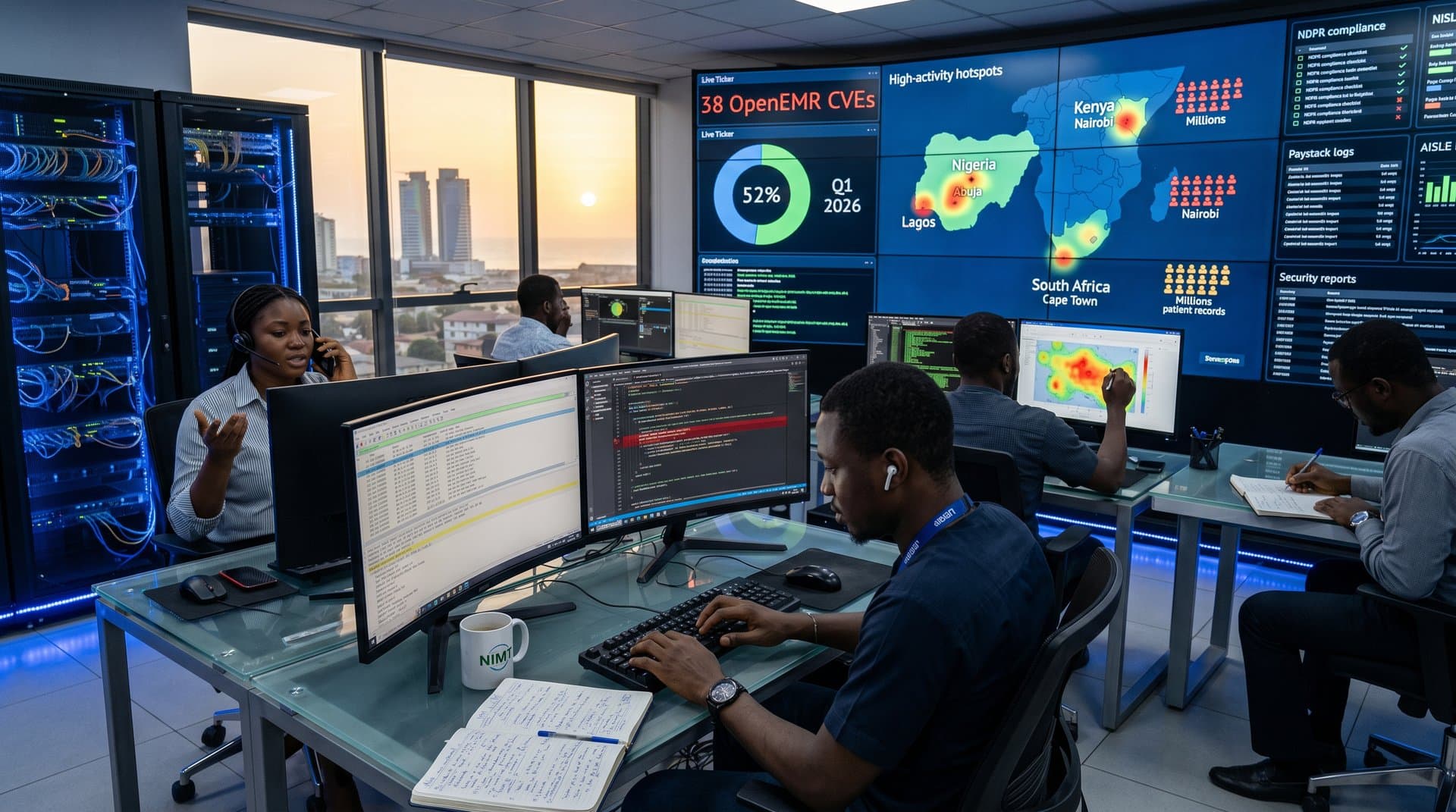
- 1. OpenAI cybersecurity framework detects deepfakes for Flutterwave and Paystack.
- 2. NITDA integrates it with CBN data localization rules.
- 3. Edge agents tackle Nigeria's 18-hour power outages.
OpenAI cybersecurity framework protects Nigeria's $40 billion fintech sector from AI threats (McKinsey, 2024). Flutterwave and Paystack deploy it against deepfakes and automated attacks. Bitcoin hit $75,783 with a $1,517.3 billion market cap (CoinGecko, October 10, 2024), amplifying risks for crypto-linked payments.
Nigeria's fintechs processed NGN 72 trillion in transactions in 2023 (Central Bank of Nigeria, Q4 2023 report). NITDA endorses the framework under its 2021-2025 National Digital Economy Roadmap to bolster cybersecurity.
OpenAI Framework Counters AI Attacks Targeting Nigeria Fintech
OpenAI cybersecurity framework uses large language models for real-time anomaly detection. It spots synthetic phishing emails and voice clones aimed at Lagos mobile users. Paystack applies it to detect irregular transactions and halt fraud (Paystack engineering blog, September 2024).
The framework tailors global tactics to Nigeria's mobile money systems, where 60% of adults hold digital wallets (EFInA Access to Finance Survey, 2023). Flutterwave conducts AI attack simulations during stress tests. OpenAI outlines core mechanisms for enterprise setups here.
CBN-licensed payment gateways handle billions of NGN daily via exposed apps. OpenAI sandboxes inputs to prevent prompt injection attacks, crucial with 45% rural mobile penetration (NCC, Q2 2024).
Nigeria Fintech Growth Demands Advanced AI Defenses
Nigeria hosts 200+ fintech startups facing AI-driven DDoS attacks during remittance peaks (NITDA Cybersecurity Report, 2024). Moniepoint deploys OpenAI edge agents to manage spotty connectivity, where users pay NGN 1,000 monthly for 40GB (NCC data).
Interswitch secures POS terminals from voice deepfakes. Yaba developers build custom integrations on local servers. Andela's engineers craft plugins, drawing from Nigeria's 500,000 tech workers (NITDA Talent Report, 2023).
Lagos endures 18-hour daily power outages (NERC, 2024), so the framework includes offline modules that resync data later. This contrasts Kenya's reliable grid (CAK, 2024), highlighting Nigeria-specific adaptations.
Framework Meets NITDA and CBN Regulatory Standards
NITDA's Director of Cybersecurity, Dr. Akintunde Johnson, confirmed alignment with national policies (NITDA press release, October 2024). It mandates data localization, keeping Nigerian user data in MainOne data centers.
Fintechs generate CBN-compliant audit trails under the 2023 Risk-Based Cybersecurity Framework. NITDA's National AI Strategy echoes OpenAI's risk models. Regulators require AI simulations for license renewals, unlike South Africa's unified POPIA approach across provinces.
CBN's PSSP and SSI licenses for firms like Flutterwave demand such defenses. Fragmented state regulations in Nigeria's 36 states add complexity absent in Egypt's centralized NGX ecosystem.
Infrastructure Gaps Shape Framework Adaptations in Nigeria
Lagos blackouts require lightweight edge computing solutions. MainOne's 2Africa cable delivers 180Tbps redundancy (MainOne, 2024). Fintechs pair it with SeamlessHR for insider threat monitoring.
CcHUB speeds adoption through GitHub forks for agritech payments. Rwanda's Smart Africa initiative benefits from stable power, unlike Nigeria's diesel generators costing NGN 5 million monthly per firm (FGN Power Report, 2024).
The framework thrives in bandwidth-limited settings, with 4G reaching 70% of urban Nigeria (NCC, 2024). Solar backups in northern hubs like Kano ensure uptime during grid failures.
Future of OpenAI Cybersecurity Framework in Nigeria Fintech
OpenAI teams with AltSchool Africa to train 10,000 developers by 2025. NITDA runs webinars on AI threats. Ethereum's $272 billion market cap (CoinGecko, October 10, 2024) signals ongoing crypto exposure.
Widespread use could slash fraud losses by 30%, from projected NGN 2 trillion yearly (EFCC, 2024). Nigeria's fintechs pioneer pan-African defenses, influencing Egypt's Fawry and Senegal's Wave expansions. Investors watch for scalable models amid currency volatility.
Frequently Asked Questions
What is OpenAI cybersecurity framework?
OpenAI cybersecurity framework uses AI for real-time threat detection against deepfakes and prompt injections. Nigeria fintechs adapt it via APIs for local power and bandwidth issues.
How does OpenAI cybersecurity framework protect Nigeria fintech?
It enables anomaly scanning for Paystack and Flutterwave with edge computing. NITDA backs CBN compliance amid $1.5T Bitcoin risks.
What AI threats target Nigerian fintech?
Deepfakes, DDoS, and injections attack mobile apps handling NGN 72T yearly. Framework simulates defenses.
How does NITDA support OpenAI cybersecurity framework?
NITDA embeds it in AI strategy, mandating simulations and data localization for fintech licenses.