- AI hacker arm costs $100 vs $5,000 commercial tools.
- Bitcoin at $74,997 USD heightens hardware wallet testing needs.
- Fear & Greed Index at 21 amid crypto hacks boosts local pentests.
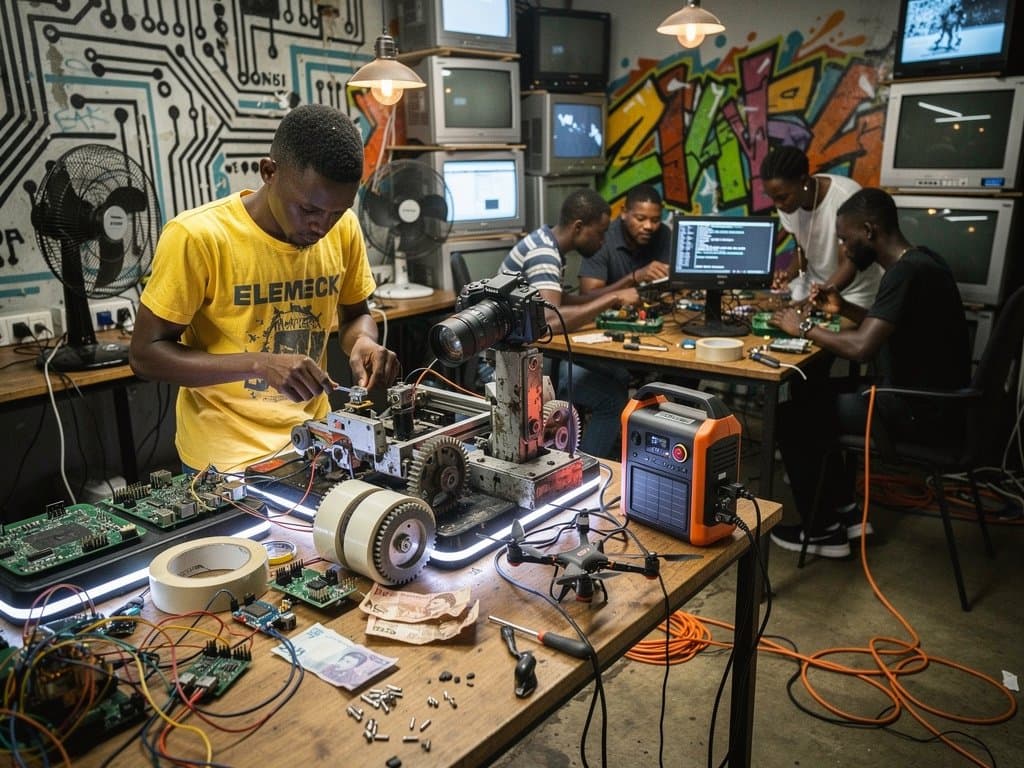
Lagos maker James Okoro unveiled an AI hacker arm on April 17, 2024. The $100 USD device uses duct tape, a repurposed camera, and CNC parts to probe SIM card and USB vulnerabilities. It targets Nigeria's fintech hardware gaps.
Okoro built the tool amid frequent power outages and NGN 500,000 ($320 USD) robotics import duties. National Bureau of Statistics (NBS) data shows these barriers spur frugal designs.
AI Hacker Arm Tests Fintech Vulnerabilities at CcHUB
Okoro demonstrated the AI hacker arm at CcHUB workshops in Yaba, Lagos. The camera employs YOLOv5 object detection on a Raspberry Pi for offline guidance of the CNC arm. This works despite Nigeria's 45% internet penetration (World Bank, 2023).
Nigeria's fintech sector processes NGN 1.2 trillion ($770 million USD) annually, per Central Bank of Nigeria (CBN) reports. Budget Chinese USB drives and POS terminals risk physical tampering.
CcHUB hosts weekly IoT security sessions. James Okoro exposed flaws in Yaba-market USB drives. "Local makers must pentest hardware ourselves because imports fail in outages," Okoro told Technology Times NG.
The AI hacker arm costs $100 USD. Commercial alternatives from Israel-based Armis run $5,000 USD. Nigeria's 60% power outage rate demands solar-powered rigs (NBS 2023 survey).
NITDA's National Centre for AI and Robotics plans to standardize such kits under NITDA Act 2021. NITDA Director Hajiya Maryam Abubakar said, "Frugal AI tools align with our data protection mandates."
Frugal Tools Protect Nigeria's Mobile Money Boom
Paystack conducts similar pentests on POS terminals in Lagos. Nigeria boasts 200 million mobile money users (GSMA 2024 Intelligence report). Physical attacks threaten these devices.
CoinGecko tracked Bitcoin at $74,997 USD on April 18, 2024, up 0.4%. Hardware wallets need local tamper tests amid crypto adoption.
XRP rose 4.2% to $1.45 USD. CryptoRank's Fear & Greed Index reached 21, signaling extreme fear after Nigeria's 2023 Busha exchange hack.
Flutterwave's CBN fintech license mandates vulnerability testing. Okoro's AI hacker arm aids compliance in Nigeria's fragmented regulatory environment.
Pan-African Maker Hubs Shape Nigeria's Approach
Kenya's iHub makerspace pioneered e-waste prototypes since 2010. Nigeria differentiates with AI edge computing for offline pentests, unlike Kenya's cloud-dependent setups under CBK rules.
South Africa's Maker Faire Cape Town displays $2,000 USD drone hacks. Nigerian versions cost 80% less through Yaba scrap markets.
Rwanda's kLab tests agritech sensors via MINICT regulations. Nigeria's NITDA framework stresses hardware audits per NITDA Act 2021.
Lagos endures 87 hours of monthly outages (NBS 2024). Okoro's solar panels cut NGN 15,000 ($10 USD) diesel expenses.
Infrastructure Gaps Fuel Resourceful Hacking
Lagos Maker Faire 2023 featured e-waste drone hacks. Okoro advanced to SIM probing for MTN's 80 million subscribers.
Diaspora engineers share GitHub repositories. NITDA offers up to NGN 10 million ($6,400 USD) prototype grants (2024 budget).
AltSchool Africa trains EdTech students on variants. "We adapt global tools to African realities like power instability," says AltSchool CTO Chike Onwuegbu.
Egypt's Flat6Labs funds similar projects at $50,000 USD seed rounds. Nigeria favors sub-$200 builds for broader access.
NITDA Scales AI Hacker Arms Continent-Wide
NITDA's Abuja AI summit in May 2024 assesses duct-tape AI hacker arms for enterprise adoption. CBN fintech sandbox integrates them.
Okoro plans open-source release on GitHub. He targets 1,000 downloads in six months. PwC projects 28% fintech GDP contribution by 2025 in Nigeria.
This positions Nigeria ahead in frugal cybersecurity amid Bitcoin volatility and regulatory demands.
This article was generated with AI assistance and reviewed by automated editorial systems.