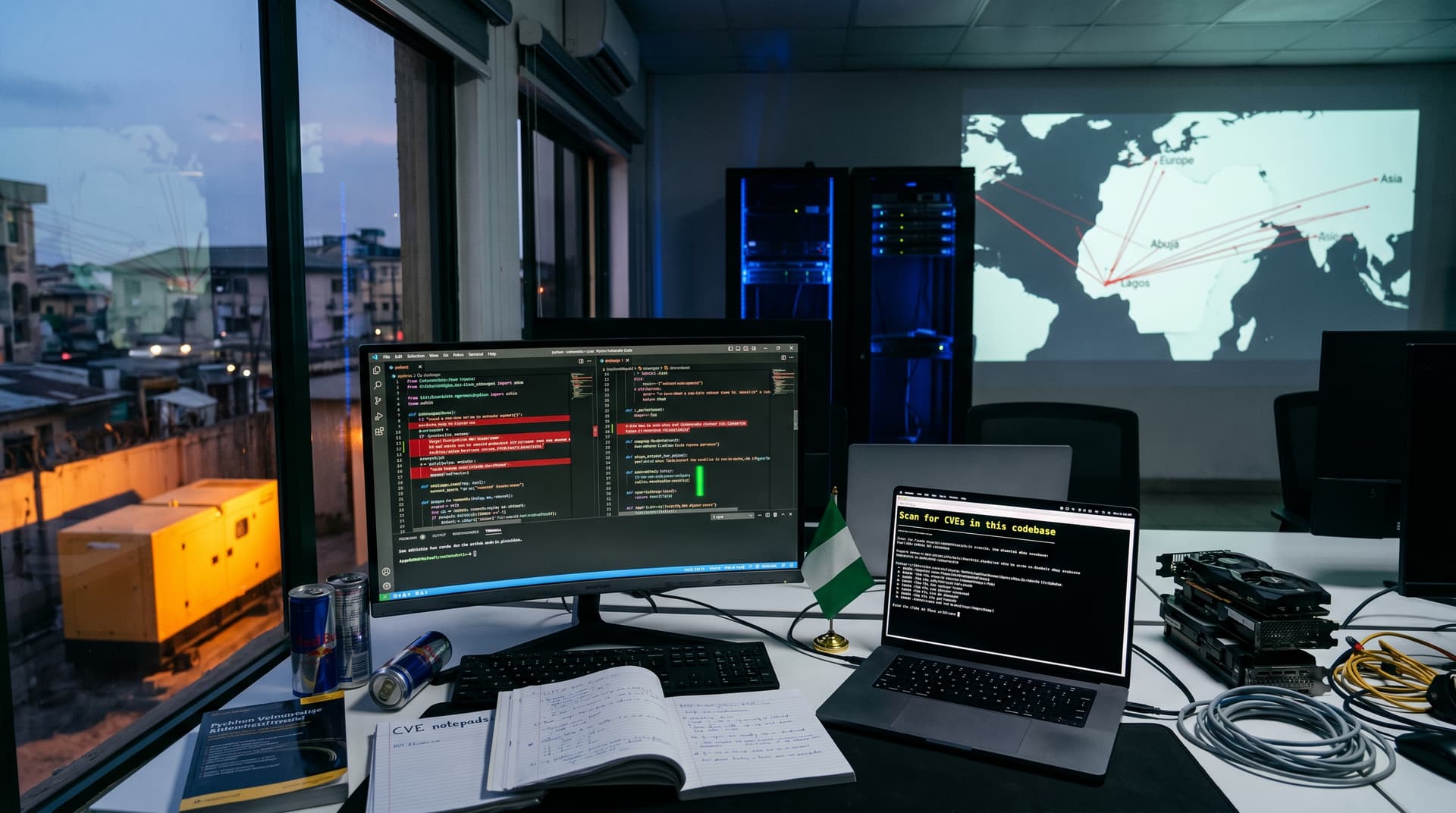
- N-Day-Bench tests show LLMs detect 18-32% of real vulnerabilities in production codebases.
- Claude 3.5 Sonnet leads at 32% detection; GPT-4o scores 22%.
- Nigeria reported 250% rise in cyber incidents targeting fintech in 2025 per NITDA data.
Key Takeaways
- N-Day-Bench tests show LLMs detect 18-32% of real vulnerabilities in production codebases.
- Claude 3.5 Sonnet leads at 32% detection; GPT-4o scores 22%.
- Nigeria reported 250% rise in cyber incidents targeting fintech in 2025, per NITDA data.
N-Day-Bench benchmark, unveiled by Princeton researchers on April 14, 2026, shows large language models (LLMs) detect only 18-32% of vulnerabilities in real GitHub codebases. Top models struggle against known CVEs (common vulnerabilities and exposures).
Carlos E. Jimenez, doctoral candidate at Princeton University’s NLP group, led the evaluation. N-Day-Bench tests "N-day" exploits—vulnerabilities disclosed 0 to 365 days prior. Models scan unmodified open-source codebases from CVE Details.
Nigeria's developers rely on LLMs for code reviews amid talent shortages. Lagos hubs like CcHUB promote AI tools. Low detection rates threaten fintech leaders Paystack and Flutterwave, which hold CBN payment licenses.
N-Day-Bench Mirrors Real-World Security Tests
N-Day-Bench draws from 500 codebases with verified CVEs sourced from CVE Details. LLMs identify and patch flaws without hints. The setup adapts SWE-bench methodology, but focuses on security over general software engineering.
Claude 3.5 Sonnet detects 32% of vulnerabilities, per Jimenez's results. GPT-4o reaches 22%. Llama 3.1 405B scores 18%. Humans achieve 65% on similar tasks, Jimenez reports.
HumanEval uses toy problems for coding benchmarks. N-Day-Bench tests enterprise-scale code. Nigerian startups deploy LLM-assisted code in CBN-licensed payment gateways. Unpatched flaws invite exploits amid NGN 1.2/kWh power costs and 45% internet penetration gaps.
LLMs Miss Key Vulnerabilities in African Codebases
Models hallucinate fixes or miss buffer overflows and cross-site scripting (XSS). XSS evades 80% of scans. SQL injection detection drops to 15% in complex repositories.
Kashifu Inuwa Abdullahi, NITDA Director General, warns of risks. "Nigeria's digital economy grows 25% yearly to NGN 50 trillion. Weak code tools amplify threats," he said on April 14, 2026.
TechCrunch analysis shows GitHub Copilot suggests insecure code 40% of the time. African developers use global tools without local adaptations for CBN or SEC Nigeria regulations.
Seun Balogun, SecureID Nigeria CEO, tests LLMs on-site. "Fintech clients face 28% false negatives on OWASP Top 10," Balogun says. Power outages disrupt local training; AWS cloud latency from Lagos adds 200ms delays.
Nigeria Fintech Faces Heightened Threats
Nigerian fintech processes NGN 50 trillion ($30 billion USD) annually via platforms like Paystack. Cyber attacks surged 250% in 2025, per Reuters reports and NITDA's 2025 Cyber Security Report.
Flutterwave patched a zero-day vulnerability last month. Paystack deploys LLMs for audits. N-Day-Bench questions their effectiveness. NITDA mandates ISO 27001 compliance; AI gaps challenge CBN-licensed operators.
Abuja agritech apps expose IoT flaws, risking farmer data in 37% unbanked regions. Andela trains 5,000 developers yearly in secure coding. LLMs assist but cannot replace experts amid 65% youth unemployment.
Nigerian crypto wallets face LLM-missed flaws. BTC traded at $74,241 USD on April 14, 2026, per CoinMarketCap data.
Africa Needs Hybrid Security Models
South Africa's Standard Bank deploys LLM scanners but trails N-Day-Bench averages. Kenya's M-Pesa reports 180 incidents quarterly, per Central Bank of Kenya (CBK) data.
Egypt's Fawry fintech integrates local AI amid SARB-equivalent regulations. Rwanda's regulatory sandbox tests hybrid tools.
NITDA launches AI cybersecurity sandbox in Q2 2026. Local models train on Nigerian repositories. Balogun predicts 45% detection with hybrid human-AI setups.
Developers adapt N-Day-Bench for African flaws like mobile money APIs. CcHUB hosts hackathons. GPU shortages limit access; diaspora engineers contribute remotely via GitHub.
Jimenez develops N-Day-Bench 2.0 for supply-chain attacks. Nigerian firms monitor progress. Hybrid pilots achieve 55% detection rates. NITDA funds tools as fintech boards demand CBN-compliant audits. N-Day-Bench sets the benchmark LLMs must surpass.