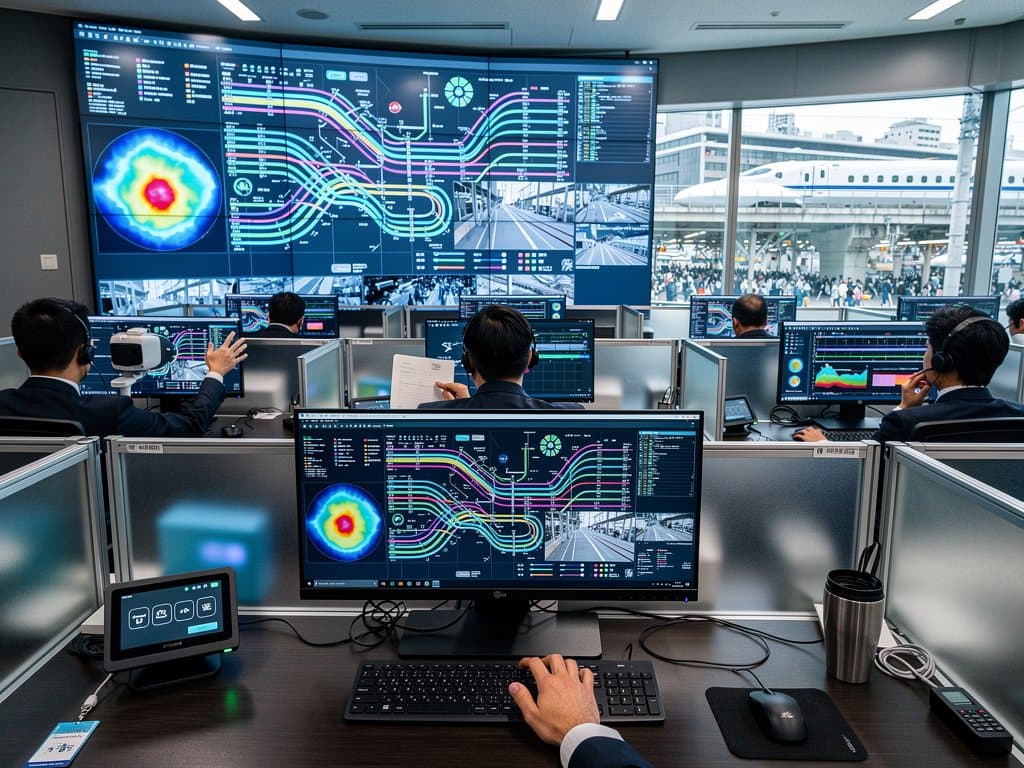
- Japan rail blueprint drives 28% passenger km share via JR East.
- JR East carries 4x Britain's passengers on fewer tracks.
- Nigeria pairs blueprint with AI to fight Lagos gridlock.
Japan rail blueprint powers JR East to 28% of Japan's passenger kilometers, versus US 0.25%. Nigeria adapts this model with AI for Lagos gridlock relief. Competition and privatization drive success, per Works in Progress magazine.
JR East carries four times as many passengers yearly as Britain's entire rail system. It operates on fewer track kilometers while serving 10 million fewer people. Eight rivals compete in Tokyo alone.
Japan Rail Blueprint Fuels Private Competition
Private electric railways boomed in Japan from 1907 to World War II. Operators built urban and intercity lines for dense populations. Nationalization created Japanese National Railways (JNR) early in the twentieth century.
JNR ran mainlines until 1987. Privatization in 1988 formed the Japan Railways Group (JR), including six regional passenger firms and one freight operator. JR East leads as the largest, per JR East's 2023 fiscal report.
Competition sharpens efficiency. Eight private railways challenge JR East in Tokyo. Kintetsu links Osaka to Nagoya with seamless service.
Japanese residents ride rail over 100 times more than Americans. Legacy private lines like Kintetsu and Tokyu control urban routes.
JR East Dominates with Japan Rail Blueprint Edge
JR East transports four times Britain's annual passengers on fewer track kilometers. It serves 10 million fewer people yet tops global rankings. Britain's systems trail despite larger scale.
Japan favors density over sprawl. Lagos packs 20 million residents onto poor roads.
AI strengthens the blueprint. Machine learning (ML) predicts passenger flows on dense networks. Algorithms tweak schedules in real time, as Nigerian startups test.
- Country: Japan · Rail Passenger Km %: 28 · Source: Works in Progress (2023)
- Country: France · Rail Passenger Km %: 10 · Source: International Union of Railways
- Country: Germany · Rail Passenger Km %: 6.4 · Source: International Union of Railways
- Country: United States · Rail Passenger Km %: 0.25 · Source: Works in Progress (2023)
Japan Rail Blueprint Outshines US Car Culture
Rail reached Japan in 1872 during the Meiji Restoration. Cars boomed elsewhere in the 1950s, but Japan expanded rail. Private firms pioneered electric lines for reliability.
US sprawl boosts cars. Japan concentrates urban cores where riders pick rail for speed. Lagos and Abuja suffer massive jams on potholed roads.
Japan's rivalry shortens waits. AI tackles African issues like power outages. Computer vision spots track faults early. Predictive analytics prevents delays.
Lagos State Government reports average commutes exceed 90 minutes daily from traffic, per 2023 LAMATA data.
Nigeria Applies Japan Rail Blueprint to Local Rails
Lagos Rail Mass Transit (LRMT) Blue Line launched in 2023. It carries 50,000 daily passengers initially. Abuja Light Rail progresses despite setbacks. Power cuts disrupt 70% of operations, says Nigerian Infrastructure Advisory Facility (NIAF).
Japan privatized debt-laden JNR. Nigeria's National Information Technology Development Agency (NITDA) promotes digital rail tools. Public-private partnerships (PPPs) mix privatization with AI scheduling.
CcHUB builds mobility apps on rail data. Rail APIs support real-time bookings. OPay and PalmPay add cashless fares for unbanked users.
Japan's Suica cards span operators. Nigeria develops fintech equivalents. Central Bank of Nigeria (CBN) licenses secure payments.
Rivals spur investment. Tokyo's eight operators push JR East upgrades. Nigerian regulators consider private line licenses for growth.
AI Enhances Japan Rail Blueprint for Nigeria
Japan uses AI for capacity management. ML forecasts Shinkansen peaks. Crowds stay orderly at rush hour.
Sensors feed neural networks. Systems detect weather delays instantly. Routes adjust dynamically.
Nigeria builds AI models starting with Lagos bus data. Developers scale them to rails. NITDA's 2023 digital economy report highlights broadband investments.
Internet gaps limit cloud AI. Edge computing handles data onboard trains. NITDA supports data centers for stable networks.
Power challenges remain. Nigeria's grid delivers 4,000 MW against 20,000 MW demand, per NIAF. Solar backups run AI systems.
Fintech Integrates with Japan Rail Blueprint Lessons
Japan stations feature retail shops that fund operations. Kintetsu mixes travel with real estate.
Nigerian firms merge fintech and mobility. AI customizes routes like payments. CBN regulates payments; Transport Ministry handles infrastructure.
Post-1988 privatization reshaped Japan. Nigeria pursues PPPs for rails. AI delivers gains amid currency volatility.
The Japan rail blueprint, plus competition, privatization, and AI, sets Nigeria up for urban transit wins in Lagos and beyond.
Frequently Asked Questions
Why does Japan outperform US railways?
Japan rail blueprint delivers 28% passenger km vs US 0.25%. Dense urban competition and 1988 privatization drive over 100x higher rail use.
How does Japan rail blueprint aid Nigeria?
Competition among Tokyo operators boosts efficiency. Nigeria pairs privatization with AI for Lagos lines and mobile money integration.
What powers JR East's edge over Britain?
JR East moves 4x Britain's passengers on fewer tracks, serving 10 million fewer amid rivals like Kintetsu.
Why blend AI with Japan rail blueprint in Nigeria?
AI optimizes schedules amid power issues. Fintech APIs from OPay enable payments on expanding networks like LRMT Blue Line.