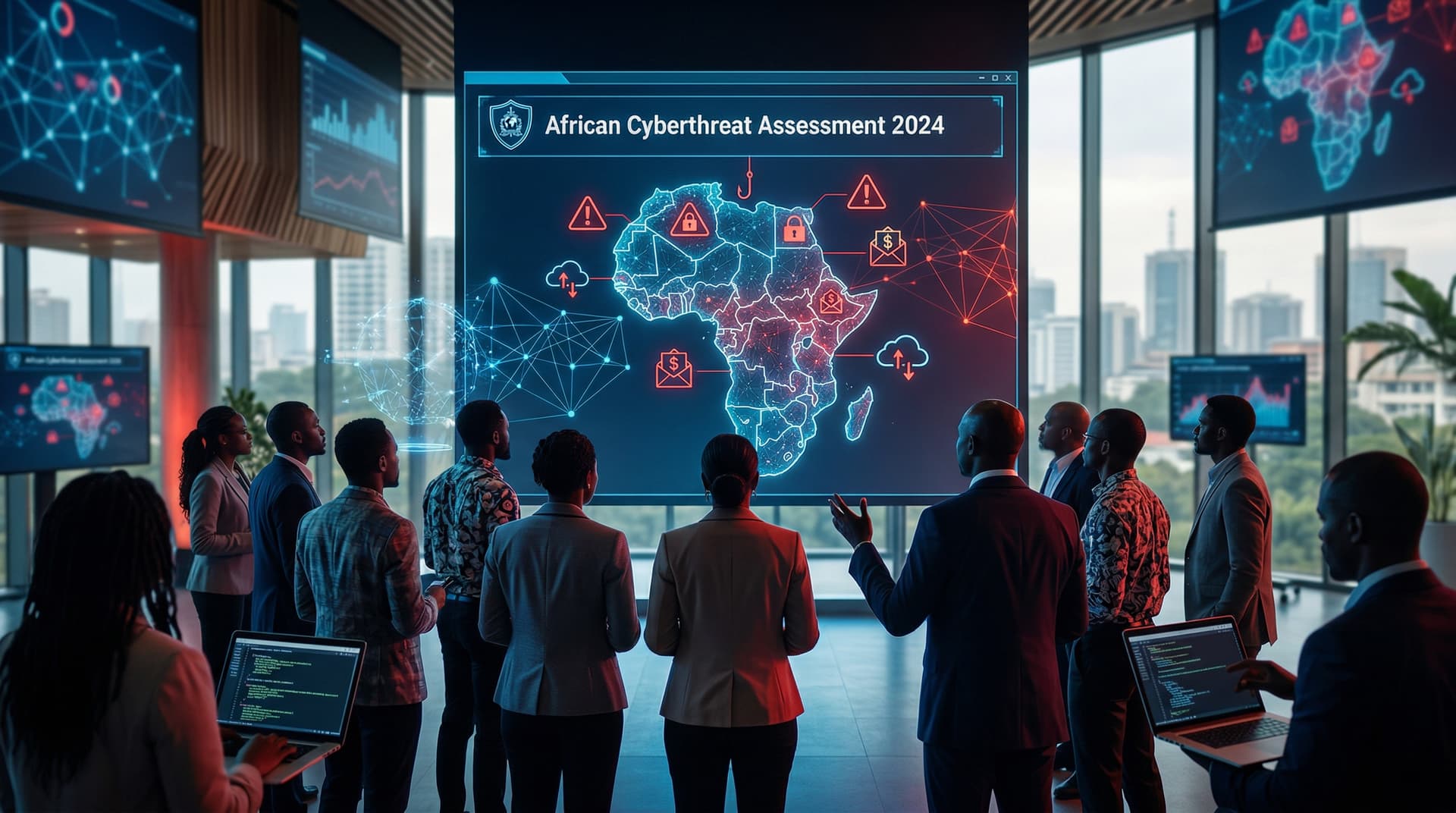
Nairobi, Kenya – October 9, 2024 – In a landmark move for continental digital security, Interpol has released the first-ever African Cyberthreat Assessment. Unveiled during the 10th African Cyberthreat Summit in Nairobi, the comprehensive report paints a stark picture of the escalating cyber dangers facing Africa's burgeoning tech ecosystem. As African nations accelerate digital transformation, from fintech booms in Nigeria to e-governance initiatives in Kenya, cybercriminals are exploiting vulnerabilities with ruthless efficiency.
The Genesis of a Continental Crisis
The assessment, a collaborative effort involving 42 African countries, law enforcement agencies, and cybersecurity experts, marks Interpol's deepest dive into region-specific cyber threats. Craig Jones, Interpol's Acting Executive Director of Cybercrime, emphasized the urgency: "Africa is at a pivotal crossroads. Our digital economy is exploding, but so are the threats. This assessment is our roadmap to resilience."
Key findings reveal Business Email Compromise (BEC) as the most pernicious threat, siphoning off a staggering $2.9 billion from African victims in 2023 alone. Perpetrated largely by West African syndicates, BEC scams involve sophisticated social engineering to impersonate executives and divert funds. Ransomware attacks, particularly from groups like LockBit and Conti, have crippled critical infrastructure, with healthcare and government sectors hit hardest.
Phishing remains rampant, evolving into AI-enhanced campaigns that mimic legitimate communications from banks like Nigeria's Access Bank or Kenya's M-Pesa. Data breaches are surging too, with over 500 million records exposed in Africa last year, fueling identity theft and fraud rings.
| Threat Type | Estimated 2023 Losses | Primary Targets | |-------------|-----------------------|-----------------| | BEC | $2.9 Billion | Financial Institutions, Businesses | | Ransomware | $1.2 Billion | Healthcare, Government | | Phishing | Undisclosed | Individuals, SMEs | | Data Breaches | 500M+ Records | Telcos, Public Databases |
Nigeria's Frontline Battle
As Africa's largest economy and tech hub, Nigeria bears a disproportionate brunt. The Nigeria Computer Emergency Response Team (ngCERT) reported over 2,000 cyber incidents in Q3 2024 alone, many linked to the threats outlined in Interpol's report. Fintech unicorns like Flutterwave and Paystack have fortified defenses, yet BEC scams netted fraudsters NGN 15 billion ($9 million) in the past year.
"Nigeria's fintech revolution is a double-edged sword," says Chinedu Okoli, CEO of Lagos-based cybersecurity firm SecureAfrika. "We're seeing innovation at scale, but without harmonized policies, we're sitting ducks for transnational crime. Interpol's assessment is a wake-up call for ECOWAS to act collectively."
South Africa, with its advanced digital infrastructure, grapples with ransomware resurgence. The 2021 Transnet attack's scars linger, and recent hits on municipalities underscore persistent gaps. Kenya, host to the summit, faces rising mobile money fraud, with M-Pesa users losing millions monthly to phishing.
Regional Disparities and Common Foes
The report spotlights disparities: North Africa contends with state-sponsored espionage from non-African actors, while East Africa's mobile-first economy battles SMS phishing. West Africa's BEC factories in Nigeria, Ghana, and Côte d'Ivoire export crime globally, ironically victimizing their home turf.
Transnational syndicates dominate, with Nigerian groups pioneering BEC tactics now aped worldwide. Ransomware-as-a-Service (RaaS) platforms lower entry barriers, enabling even novice hackers to strike. Interpol urges public-private partnerships, citing successes like Operation Red Card, which dismantled BEC networks across five countries.
Policy Imperatives and Capacity Building
Recommendations are actionable: Establish national Cyber Fusion Centers, invest in AI-driven threat intelligence, and foster cross-border data sharing via the African Union's Malabo Convention. Capacity building is critical—only 28 African nations have dedicated cyber police units.
The summit featured workshops on blockchain forensics and quantum-resistant encryption, drawing 500 delegates from Interpol's 196 member states. Kenyan Interior CS Kithure Kindiki hailed it: "This is Africa's moment to own its cybersecurity narrative. No longer bystanders in the global cyber arena."
For startups in Nigeria's Yaba tech cluster or Rwanda's Kigali Innovation City, the report signals investment opportunities in endpoint detection and African-centric threat intel platforms. Firms like CyberSecAfrica are already pivoting, offering localized solutions immune to Western biases.
A Call to Digital Sovereignty
As Africa eyes a $180 billion digital economy by 2025 per McKinsey, cybersecurity isn't optional—it's existential. Interpol's assessment, freely available online, equips policymakers, CISOs, and entrepreneurs with data-driven insights. Yet implementation lags without political will.
Nigerian lawmakers are mulling amendments to the Cybercrimes Act 2015 to criminalize RaaS explicitly. Ghana's National Cyber Security Centre pushes for mandatory audits on critical infrastructure. Ethiopia and Uganda eye Interpol's model for their nascent frameworks.
Challenges persist: Underfunded agencies, brain drain of cyber talent to Europe, and porous borders for malware spread. But optimism abounds. "Africa's youth are our greatest asset," notes Interpol's Jones. "Train them as defenders, not just developers."
Looking Ahead
The Nairobi Summit's momentum carries into December's AU Cybersecurity Month. Expect bilateral pacts, like Nigeria-Kenya intel sharing, and venture funding for homegrown tools. As 5G rolls out continent-wide, proactive measures today avert tomorrow's crises.
Interpol's African Cyberthreat Assessment isn't just a report—it's a battle plan. For Technology Times NG readers in Lagos, Accra, or Cape Town, it's a reminder: In cybersecurity, vigilance is the new currency.
Word count: 912
Sources: Interpol official release, African Cyberthreat Summit proceedings, ngCERT quarterly report, interviews with regional experts.