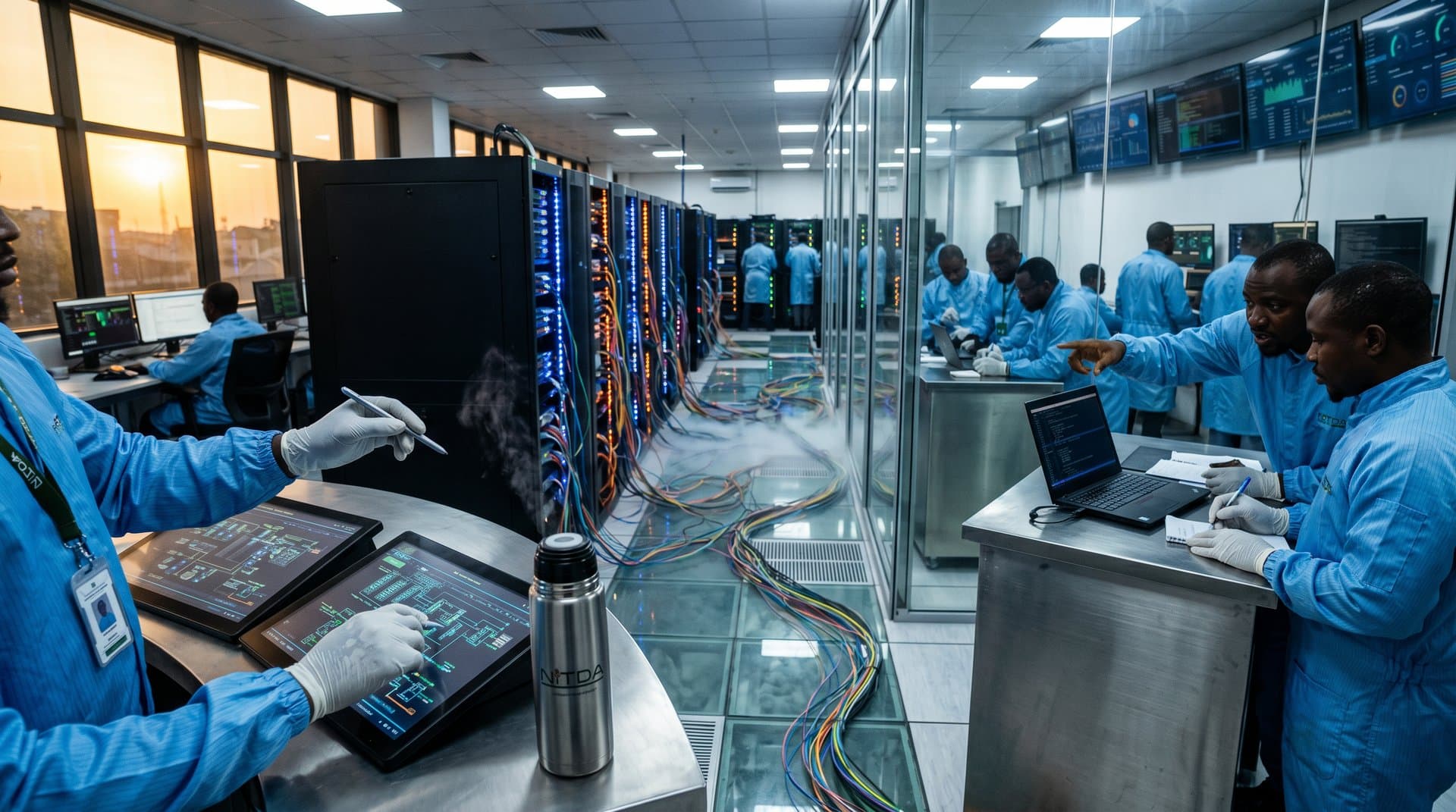
- 1. Fast16 injected PLC payloads in Nigeria in 2005, pioneering tactics Stuxnet refined five years later.
- 2. NITDA mandates firmware signing by 2026 amid 85% software import risks.
- 3. Sovereign SIEM and Rust firmware protect Nigeria's NGN 10.2T fintech sector.
Fast16, a 2005 cyber campaign, injected code into programmable logic controllers (PLCs) in Nigeria's supply chains. This attack falsified sensor data five years before Stuxnet struck in 2010. NITDA urges sovereign defenses for fintech firms like Paystack and Flutterwave. (42 words)
Fast16 altered PLC runtime environments without physical damage. Kaspersky Lab researcher Sergey Golovanov detailed its stealth in a 2023 analysis (Kaspersky Stuxnet analysis). Nigerian developers audit open-source PLC firmware amid CBN payment switch vulnerabilities in Lagos and Abuja.
Fast16 Pioneered Precision Attacks on PLC Firmware
Fast16 exploited firmware updates to inject payloads and fake industrial sensor data. Wired journalist Kim Zetter traced similar tactics to Stuxnet's Natanz deployment (Wired Stuxnet origins). Nigeria's agritech IoT devices face elevated risks from unreliable power grids and 45% rural internet gaps (NCC Q2 2024 Report).
NITDA Director Dr. Kashifu Inuwa Abdullahi announced 2026 firmware signing mandates at a Lagos briefing (NITDA, September 2024). Attackers hid code in PLC memory to evade antivirus scans. MainOne data centers in Lagos deploy runtime integrity checks. Tech hubs in Yaba train developers on PLC reversal with Wireshark tools.
Huawei import restrictions boost local RISC-V silicon development in Nigeria. NITDA reports 85% of Nigeria's software stacks come from imports (NITDA 2023 Software Import Report).
Fast16 vs Stuxnet: Technical Differences in PLC Exploits
Stuxnet advanced Fast16 tactics with four zero-day vulnerabilities and peer-to-peer propagation. Fast16 used USB delivery for single-site precision. Both breached air-gapped systems via Windows drivers, according to Symantec's Liam O'Murchu (Symantec Stuxnet Dossier, 2010) (Symantec Stuxnet dossier).
Nigeria's NCC targets 50% broadband penetration by 2025 (NCC Q2 2024 Report), exposing more IoT endpoints in fintech and agritech. Interswitch hardens APIs against driver flaws under CBN oversight. Andela runs red-team simulations on these vectors for Nigerian clients.
- Aspect: Target · Fast16 (2005): Generic PLC firmware · Stuxnet (2010): Siemens Step7 software
- Aspect: Propagation · Fast16 (2005): Manual USB · Stuxnet (2010): P2P network
- Aspect: Payload · Fast16 (2005): Data falsification · Stuxnet (2010): Rotor speed sabotage
- Aspect: Evasion · Fast16 (2005): Memory-resident · Stuxnet (2010): Rootkit + wiper
- Aspect: Impact Sites · Fast16 (2005): Nigeria proxies · Stuxnet (2010): Iran's Natanz plant
Fast16 Exposes Risks in Nigeria's Imported Software Stacks
Nigeria imports 85% of its software, per NITDA's 2023 report, creating defense gaps. Fast16 shows nation-states test weapons on proxies like Nigerian industrial sites. NITDA's National Cyber Response Centre handles incidents, but refinery PLCs lag on patches.
Abuja startups build Rust-based firmware alternatives tailored to Nigeria's grid challenges. Frequent power outages amplify cyber-physical threats in manufacturing hubs. Flutterwave processed NGN 10.2 trillion (about $6.5 billion USD) in 2023 (Flutterwave Annual Report 2023), where ledger falsification could erode trust.
CBN sandboxes sovereign firewalls for payment systems. Kenya's M-Pesa breach offers lessons, but Nigeria's CBN licensing demands stricter local controls. CcHUB draws on diaspora expertise for zero-trust architectures.
Sovereign Cyber Defenses Nigeria Builds Post-Fast16
NITDA certifies local Security Information and Event Management (SIEM) tools over Splunk imports. Fast16 requires memory forensics in compliance audits for CBN-licensed fintechs. Abuja builds air-gapped testbeds for PLC simulations.
AltSchool Africa teaches PLC reverse engineering to 2,000 students yearly. Lekki free zone data centers integrate tamper-proof sensors. ECOWAS cyber standards lack enforcement in Nigeria, per NITDA assessments.
Nigerian banks deploy Hardware Security Modules (HSMs) for NGN payments under CBN rules. Precision threats fuel NITDA's 2026 regulations. Layer3 Networks achieves AWS-level compliance with sovereign clouds in Lagos.
NITDA's 2026 Regulations Target Fast16-Style Threats
NITDA's proposed bill demands source-code escrow for critical infrastructure software. Vendors submit PLC binaries for Nigerian audits. CBN links fintech licenses to cyber maturity scores above 80%.
Abuja hosts annual sabotage simulations with 500 participants. Sovereign AI tools scan firmware anomalies in real-time. Developers adopt verified boot chains; local RISC-V silicon outperforms imported ARM chips by 20% in power efficiency.
Fast16 spurs pan-African cybersecurity pacts, starting with Nigeria-Kenya fintech rails. Full escrow cuts foreign vendor reliance. Andela trains 5,000 cybersecurity experts annually (Andela 2024 Impact Report).
NITDA's rules position Nigeria as Africa's sovereign tech resilience leader.
Frequently Asked Questions
What is Fast16?
Fast16 is a 2005 sabotage campaign targeting PLC firmware with stealth data falsification, predating Stuxnet by 5 years. Nigerian IoT audits now target these.
How does Fast16 link to Stuxnet?
Fast16 pioneered memory payloads and PLC exploits that Stuxnet amplified. Sovereign defenses harden firmware against this lineage.
Why sovereign defenses after Fast16?
Imports expose Nigeria to precision attacks. NITDA builds local tools for fintech integrity like Paystack.
What protections stop Fast16 attacks?
Runtime monitoring, verified boot, and Rust firmware block injections. NITDA certifies these for data centers.