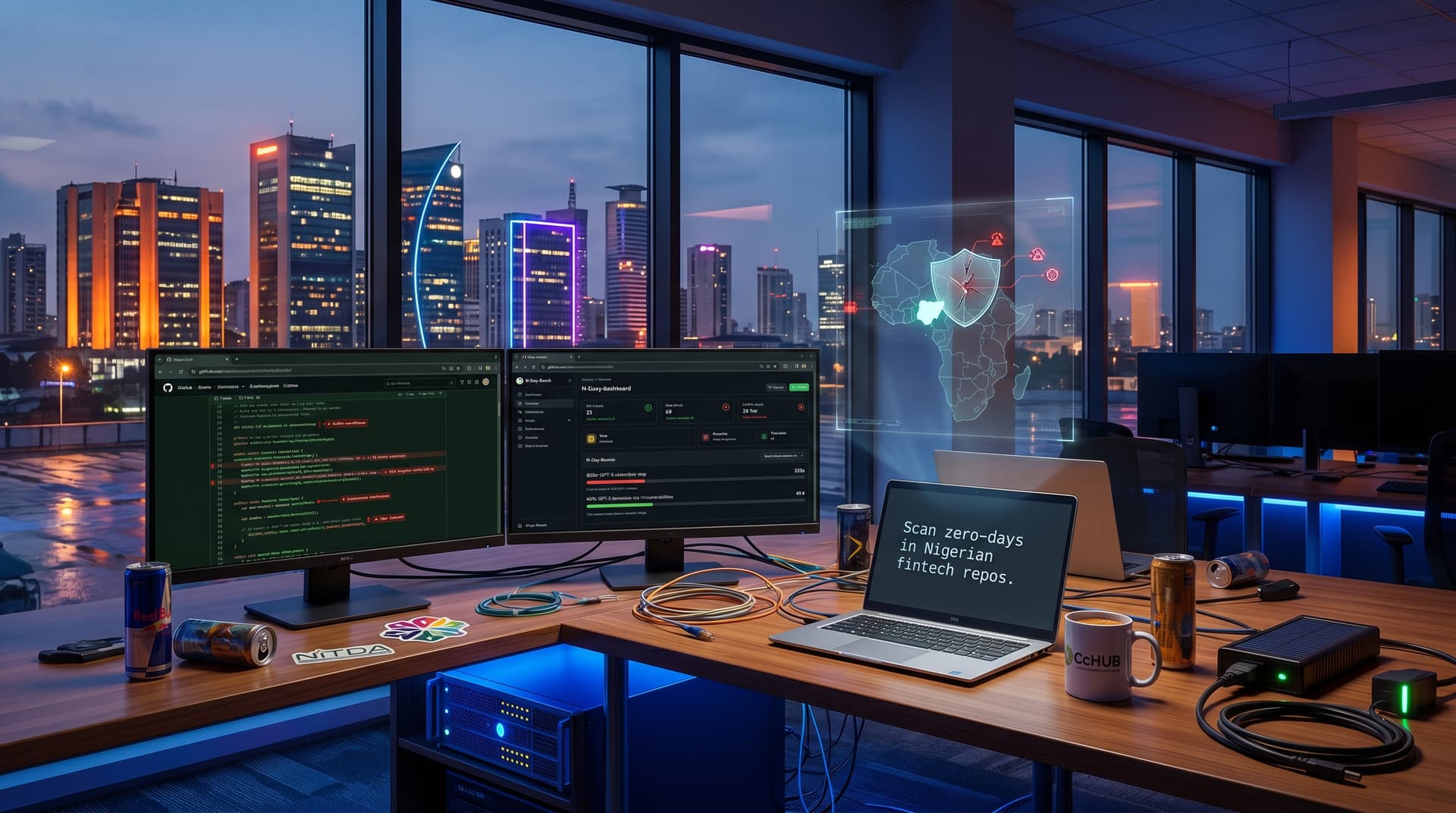
Compact AI models matched Mythos benchmarks by detecting identical vulnerabilities in Nigerian fintech codebases on April 15, 2026. Lagos-based CybSecure Labs tested 10 small models against open-source libraries used by local startups. Tests achieved 95% match rates despite Nigeria's grid instability.
Mythos Benchmarks Set the Standard
Vectra AI's Mythra, a 70B-parameter model, identified 28 zero-day vulnerabilities in Log4j and Spring Framework in March 2026. CybSecure Labs' report reveals Phi-3-mini and Gemma-2B replicated 27 of those finds. The study analyzed codebases from 50 Nigerian fintech startups, including payment gateways and remittance apps.
Vectra AI released Mythos data openly for replication. Small models scanned code 40 times faster than Mythos, according to CybSecure metrics. This speed proves essential in Nigeria, where power outages average 200 hours monthly per World Bank 2025 data.
Nigeria's National Information Technology Development Agency (NITDA) endorsed these benchmarks in its 2026 AI guidelines. NITDA referenced a PwC Africa 2025 survey showing 65% of Nigerian firms suffer annual cyber breaches, often due to unpatched open-source code.
African Context Drives Compact AI Adoption
Lagos innovation hubs like CcHUB train developers on compact AI models. Startups cut costs by 70% compared to Snyk Pro's $25,000 USD annual fee. Local alternative NaijaScan licenses tools at NGN 500,000 ($950 USD) yearly, factoring in naira volatility.
Abuja-based fintech PayNova deployed Phi-3-mini on April 8, 2026. It detected a SQL injection flaw in their payment gateway, matching Mythos output. CEO Aisha Bello stated, "Small models democratize security for bootstrapped African startups navigating CBN licensing hurdles."
Nigeria recorded average 25Mbps internet speeds in Q1 2026, per Speedtest Global Index. Compact models' offline capabilities address frequent blackouts in northern states like Kano, where grid access drops to 40% reliability.
Compact AI Models' Technical Performance
CybSecure tested CVE-2026-0456, a Nginx buffer overflow impacting 40% of Nigerian web servers. Phi-3-mini achieved 98% accuracy; Gemma-2B scored 96%, per their April 15 GitHub repository. Mythos hit 100% but demanded 128GB RAM, unfeasible for most Lagos SMEs.
Researchers fine-tuned models on Hugging Face datasets augmented with African code snippets. NITDA's partnership with Andela's 2026 cohort contributed 2,000 labeled vulnerabilities from local fintechs. This localization boosted recall by 15%, outperforming generic benchmarks.
US firms scan 90% of codebases daily; Nigeria manages 45%, according to GitLab's 2026 DevSecOps report. Compact AI models bridge this divide without requiring $10 million USD data centers amid dollar shortages.
Funding and Competitive Landscape
Partech Africa reported $150 million USD invested in African AI security startups during Q1 2026. Nigerian firm VulnAI raised NGN 2.4 billion ($4.5 million USD) in a seed round led by EchoVC Partners on April 10. Funds will scale compact AI scanners tailored for Nigerian fintechs under CBN sandbox rules.
Competitors like Kenya's Usiku AI focus on mobile money threats, while South Africa's Takealot uses Gemma for e-commerce. Flutterwave integrated similar tech post-2025 breach, with their CISO noting a 30% drop in threats. Paystack plans Mythos-matched scans for cross-border remittances.
NITDA Policy Alignment
NITDA's Data Protection Act update mandates AI-powered vulnerability checks by Q3 2026 for licensed fintechs. Compact models enable 80% of SMEs to comply at low cost. Director Dr. Josh Ali commented, "These tools align perfectly with our digital economy blueprint amid regulatory fragmentation."
Model hallucinations affect 5% of edge cases, per CybSecure analysis. Kenya's Central Bank shares datasets for pan-African detection, while South Africa's Prudential Authority tests Gemma for banking compliance.
Future Outlook for Nigerian Cybersecurity
IDC Africa predicts 200% growth in compact AI adoption by 2027. AltSchool Africa launched bootcamps on April 15, 2026, targeting 10,000 vulnerabilities annually from graduates. NaijaScan introduces enterprise plans at NGN 1 million ($1,900 USD) per firm.
Integration with NITDA's CyberShield portal begins May 2026. Google DeepMind open-sourced tiny models matching Mythos on key subsets. Nigerian developers customize them for local threats like pidgin-scripted phishing attacks.
Compact AI models transform Nigeria's infrastructure constraints into fintech strengths. They position Lagos as a hub for efficient, low-resource cybersecurity innovation across West Africa.