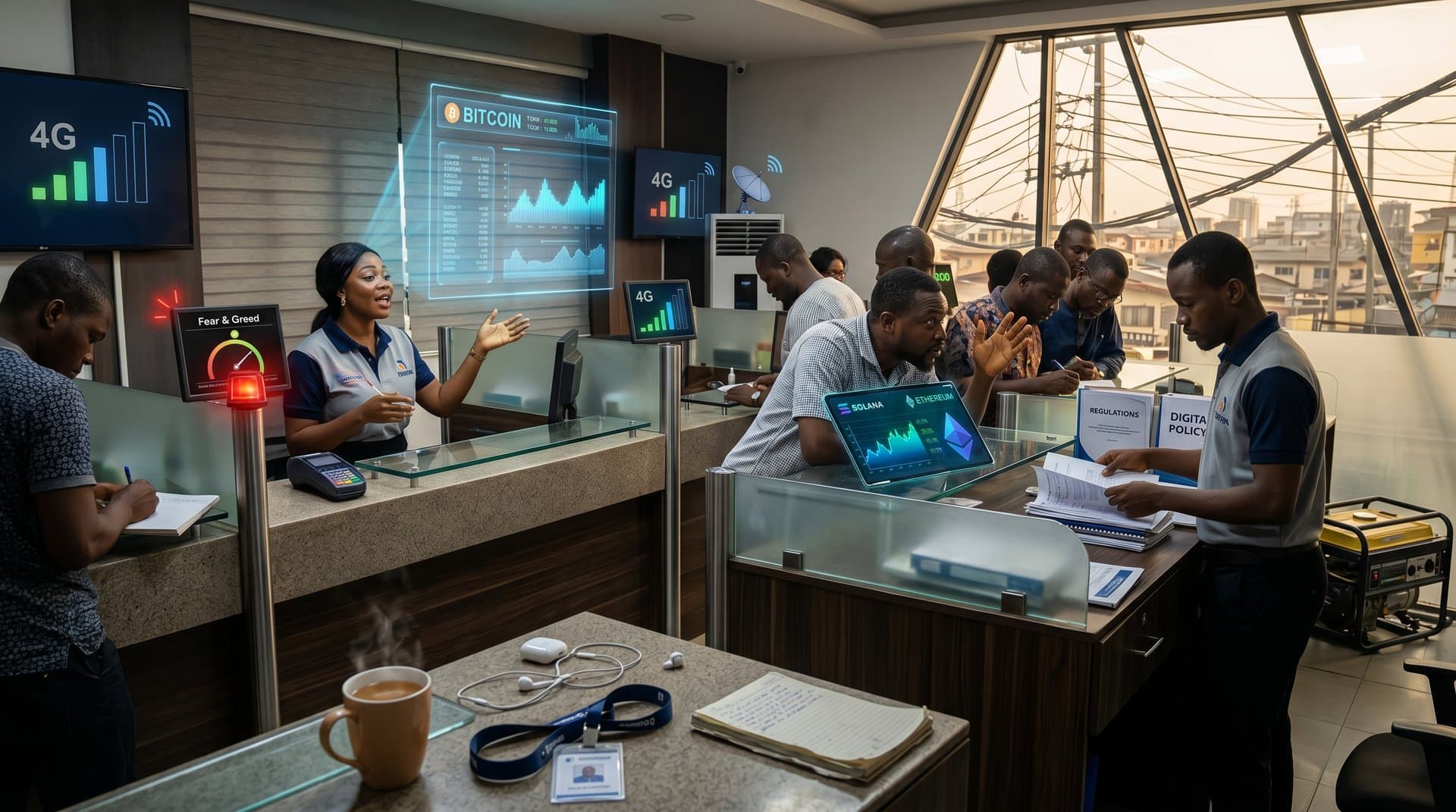
- Fear & Greed Index at 26 signals extreme fear, per Alternative.me.
- Community banks hold 20% of Nigeria's tier-2 city deposits, per NITDA.
- Bitcoin at $75,989 with $1.52T cap as of October 10, 2024.
Community banks crypto adoption stalls in Nigeria.
Nigerian community banks hold 20% of tier-2 city deposits worth NGN 4.5 trillion, per NITDA's 2023 Financial Inclusion Report. Yet CBN restrictions and infrastructure gaps block integration. The Crypto Fear & Greed Index hit 26 on October 10, 2024, per Alternative.me data.
Bitcoin traded at $75,989 with a $1.52 trillion market cap. Ethereum stood at $2,276 with $274.8 billion cap, per CoinGecko.
CBN and NITDA Regulations Block Community Banks Crypto Adoption
NITDA's Nigeria Data Protection Act mandates onshore data storage for financial services. Community banks lack Tier III-compliant data centers. Lagos fintechs use AWS Africa in Cape Town, per NITDA's 2024 Infrastructure Audit.
CBN's National Payment System Vision 2025 restricts crypto-fiat gateways to licensed exchanges. The CBN payments framework prioritizes risk management. Small banks without approvals stay excluded.
CBN revoked licenses in the 2021 fintech clampdown. NITDA Director General Kashifu Inuwa Abdullahi warned in September 2024 that unapproved crypto risks systemic threats. Giants like Flutterwave and Paystack dominate as a result.
Rural Infrastructure Gaps Widen Community Banks Crypto Barriers
NCC data shows rural broadband at 37.5% in Q2 2024, versus 65% urban. Community banks rely on spotty 4G for blockchain verification. Transactions delay by minutes.
World Bank Nigeria Development Update (July 2024) reports 12-hour daily power outages. Diesel generators cost NGN 50 million ($30,000 at NGN 1,650/$1). Banks with under NGN 5 billion assets cannot afford them.
Solana traded at $83.47 ($48.1 billion cap). TRX hit $0.32 ($30.6 billion cap), per CoinGecko Bitcoin page. Urban fintechs deploy Starlink at $500 per unit.
Barriers Slow Nigerian Fintech Growth, Community Banks Crypto Adoption
Fintechs target community banks' NGN 4.5 trillion deposits for USDT yields ($1.00, $189.6 billion cap). This enables agritech loans and remittances, per NITDA 2023 data.
Offshore funding from TLcom Capital complicates Naira repatriation under CBN forex rules. Andela alumni develop DeFi for farmers but lack local custody.
Ethereum's $2,276 price aids layer-2 tests via Polygon. Bank boards shun volatility at Fear Index 26. Kenya's KCB integrates via BitPesa. South Africa's FSCA licenses 40+ providers. Egypt's CBE pilots CBDCs, per Governor Tarek Amer.
Pathways Advance Community Banks Crypto Adoption
Licensed exchanges like Quidax offer compliant white-label wallets. Quidax handled NGN 100 billion volume last year.
NITDA sandboxes enable six-month pilots without full licenses, as Bundle Africa used. NITDA digital economy guidelines draw from EU MiCA for stablecoins.
CcHUB provides Tier II data centers for Solana nodes at NGN 2 million monthly. AltSchool Africa trained 500 bankers on wallets in 2024.
Bitcoin stabilizes at $75,989. NITDA's Kashifu Inuwa Abdullahi forecasts 30% community banks crypto adoption by 2026. This unlocks NGN 1 trillion liquidity for Nigeria's fintech ecosystem.
Frequently Asked Questions
What blocks community banks crypto adoption in Nigeria?
CBN and NITDA rules demand onshore data and licensed gateways. Fear & Greed Index at 26 heightens volatility fears.
How do barriers impact Nigerian fintech growth?
Fintechs lose local bank liquidity, turning to offshore funds. Agritech DeFi stalls without custody rails.
Why does infrastructure hinder crypto for community banks?
12-hour power outages and low rural broadband block nodes. Gensets cost NGN 50M; Starlink aids fintechs.
How can banks overcome crypto barriers?
Use NITDA sandboxes, Quidax partnerships, and CcHUB hubs for pilots with USDT and Solana.