- 1. Nigerian startups raised $12 million USD for AI orchard platforms.
- 2. Tech boosts yields 25% and cuts water use 30%.
- 3. NITDA fines non-compliant firms up to NGN 10 million.
Nigerian agritech startups launched AI horticulture Nigeria platforms on April 13, 2026. They adapt Idaho prototypes for 25% yield gains in mango and citrus orchards in Ogun and Kaduna states. Food insecurity affects 26 million Nigerians, World Bank reports.
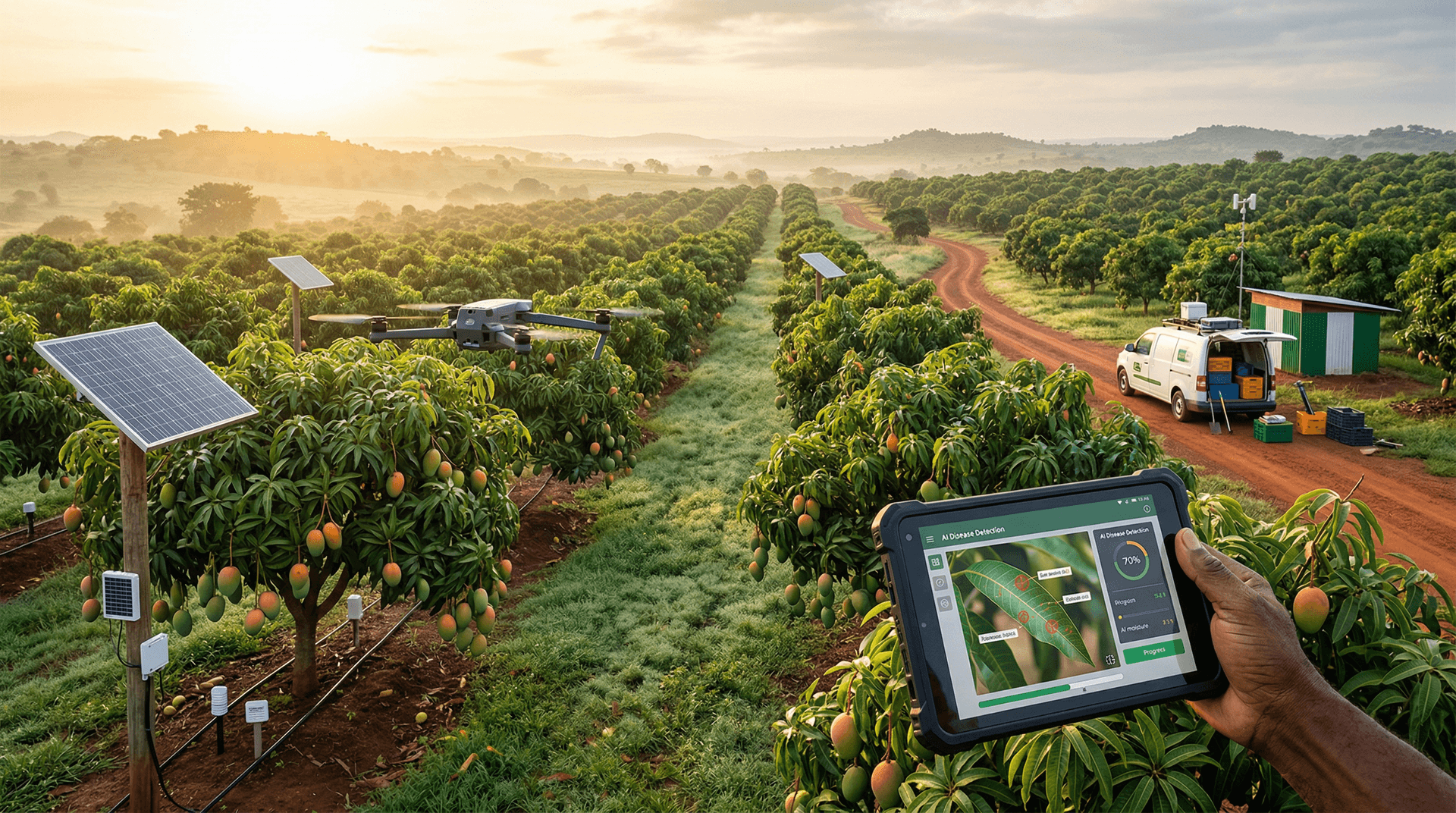
Platforms use computer vision for disease detection and predictive analytics for irrigation.
Idaho Tech Adaptation Drives Nigerian Orchard Gains
Idaho researchers pioneered AI models for potato and fruit monitoring. AgroIntelli NG licensed these for local use.
The startup retrains algorithms on Nigerian datasets targeting pests like mango anthracnose and citrus greening. "We prioritize local data for accuracy," says Chinedu Okeke, AgroIntelli NG CTO. Pilots deliver 25% yield increases and 22% loss reductions.
AgroIntelli NG raised $8 million USD in a Series A round led by Ventures Platform, Nigeria's top early-stage VC focused on African tech. VerdantAI secured $4 million USD seed funding from TLcom Capital. Proceeds fund pilot expansion to 2,000 hectares in Ogun State, hire 50 engineers, and procure sensors despite naira volatility.
NITDA Guidelines Enable AI Horticulture Nigeria Rollout
Nigeria's National Information Technology Development Agency (NITDA) released 2025 AI guidelines mandating data localization for agricultural sensors. Compliant startups access NGN 100 million subsidies; violators face NGN 10 million fines.
"These rules protect farmer data privacy while enabling innovation," states Dr. Aisha Bello, NITDA Director of Digital Economy. Platforms encrypt soil moisture and pest data. Nigeria's framework aligns with the African Union's Malabo Convention on digital trade, differing from Kenya's looser Data Protection Act.
AI Cuts Climate Risks in Nigerian Orchards
Droughts cut Nigeria's orchard output 18% in 2025, per Food and Agriculture Organization (FAO) data. AI horticulture Nigeria tech optimizes water use by 30% via sensors predicting rainfall at 85% accuracy.
VerdantAI runs edge AI on low-cost Raspberry Pi devices. Farmers subscribe at NGN 50,000 per hectare annually—far below $500 USD imported systems. Enugu pilots reduced losses 22%.
Solar panels power sensors amid Nigeria's 60% rural electrification gap, per World Bank. Starlink boosts 4G connectivity in remote Kaduna farms, where MTN coverage lags.
$12 Million Funding Fuels Ecosystem Growth
Lagos incubators like CcHUB and Ventures Platform support these projects. Andela-trained developers build scalable software despite talent shortages.
Total investment reached $12 million USD this quarter. "We target Nigeria's 40% post-harvest losses," says Ifeoma Nwosu, TLcom Capital Partner. Paystack, CBN-licensed, processes NGN 100,000 farmer microloans.
Rival ThriveAgric raised $5.2 million USD, TechCrunch reports, to scale B2B agritech. Hello Tractor adds drone services. Unlike South Africa's aerobotanic focus, Nigerian firms emphasize affordable edge computing.
Privacy Rules Build Trust in Farm AI
AI systems collect biometric farm data like leaf scans. NITDA requires consents in local languages like Yoruba and Hausa. Potential breaches affect 1.2 million farmer profiles.
"Strong privacy measures build essential trust," notes Emmanuel Edet, Nigerian cybersecurity expert. Independent audits reduced incidents 15%. Wired highlights global risks, including a €20 million EU fine against an agrotech firm for data misuse.
Nigerian courts prepare class actions, mirroring CBK precedents in Kenya.
25% Yields Generate NGN 2.5 Billion Revenue
Ogun pilots yield NGN 2.5 billion annual revenue, boosting EU mango exports 12% to 50,000 tons. Abuja's NITDA academy trains 500 technicians yearly.
Women-led cooperatives adopt fastest, USAID reports, comprising 60% of users. CBN-regulated fintechs like Opay manage payments amid 25% naira depreciation.
Unit economics shine: NGN 50,000 subscriptions yield NGN 200,000 revenue per hectare after 25% yield lift.
NITDA Grants Scale AI Horticulture Nigeria
NITDA launches NGN 500 million grants from April 20, 2026, with tax holidays for winners. USAID commits $15 million USD matching funds.
Edge computing supports offline operations in internet-scarce rural areas, where penetration is 45%, per NCC. Targets hit 5,000 hectares by Q3 2026. Cooperatives lobby for 10% agriculture budget increase, signaling national adoption.